Ultimate Guide to Choosing a Kitten Scratching Post
By CatsOnly Care Team • October 14, 2026
Why Kittens Need Scratching Posts
Scratching is a normal, instinctive feline behavior. Kittens use it for stretching, claw maintenance, and visual and scent marking. A suitable kitten scratching post gives your young Cat safe places to express that behavior before furniture becomes the default choice. Look for a stable, secure base, an accessible size that lets your kitten stretch comfortably, and textures such as woven sisal or corrugated cardboard, while remembering that individual Cats may prefer different surfaces or orientations. Place scratching surfaces near areas your kitten already uses, including resting spots and activity areas. Understanding kitten behavioral development can help you build supportive habits early.
Why Kittens Scratch: Claws, Stretching, and Communication
When a kitten scratches, they are practicing normal claw maintenance and communication. Scratching helps loosen and remove older outer claw sheaths as new growth comes through. It also gives your kitten a chance to stretch, explore texture, and leave familiar scent marks from the paws. An appropriate scratching surface supports these natural behaviors while helping protect furniture.
Scratching also supports scent-based and visual communication. Cats have scent glands in their paws, so scratching can leave scent on a surface along with the visible grooves made by their claws. These scent and scratch marks are part of normal feline communication, though they do not always mean one specific thing. For a Kitten exploring new rooms, scratching offers a natural way to interact with and map their surroundings.
Helping Your Kitten Use a Scratching Post Instead of Furniture
Kittens naturally investigate different textures and scratching surfaces, and some may try sofas, carpets, or other furniture as normal feline behavior. They may prefer certain textures, orientations, locations, or stable surfaces, so the goal is to offer suitable alternatives.
Punishment or scolding can undermine trust and, more importantly, it does not show your Kitten where to scratch. Instead, offer an appropriate scratching surface close to the furniture they have been using. If your Kitten notices it, you can encourage gentle investigation with a wand toy, praise, or a small treat, depending on what motivates them. Reward voluntary scratching, and let them choose to interact at their own pace.
What to Look for in a Kitten Scratching Post
Choosing the best scratching surface starts with stability, size, material, and orientation. Your kitten may prefer a vertical post, a flat horizontal scratcher, or an angled surface, so choose an accessible option that fits their body size and scratching style. A good setup stays steady, resists sliding, and gives Cat Parents an easy way to redirect scratching away from furniture.
Choosing the Right Kitten Scratching Post Height and Stability
Stability is a key safety and usability factor when choosing a kitten scratching post. If a post tips, slides, or wobbles during normal scratching, it may feel less appealing to your Kitten and could create a potential safety risk. Look for a broad base, a non-slip surface, and a design that stays secure when your Kitten stretches, climbs, or scratches.
Height matters because a vertical scratching surface should let your Kitten reach up and stretch comfortably through the shoulders, back, and front legs. There is no one perfect height for every Kitten, since the right dimensions depend on their current size and how quickly they are growing. A post that works well for a small Kitten may need to be replaced or supplemented with a taller option as your Cat matures.
Keep the goal clear: a scratching post is for scratching and stretching, while a larger climbing structure is for climbing, perching, and broader activity. Optional toys can help spark interest, but stability and safe design matter more. Avoid leaving hanging strings, cords, or loose detachable parts available without supervision.
Scratching Post Materials: Sisal, Cardboard, Wood, and Carpet
Kittens may prefer different scratching textures. Offering a few options can help you discover which materials your kitten enjoys using:
- Natural Woven Sisal and Sisal Rope: Both are common scratching materials that provide textured, resistant surfaces for claw contact and stretching. Durability depends on construction and use, so check for loose or fraying fibers.
- Corrugated Cardboard: Cardboard is a common option, especially for horizontal or angled scratchers. It wears down with use and should be replaced when damaged.
- Solid Wood: Wood is available in some scratching posts, but it is not right for every Kitten. Choose stable surfaces that are free of splinters or sharp edges.
- Carpet: Carpet can be a legitimate scratching surface. A Kitten’s preference may depend on texture, placement, orientation, stability, and reward-based reinforcement.
Choosing and Placing Your Kitten's Scratching Post
Selecting scratching furniture works best when it reflects your Kitten's preferences, daily routes, and your home's layout. Offer accessible scratching options near resting spots, commonly used pathways, or places your Kitten already investigates, and use our kitten preparation guide when planning the broader home environment.
| Material | Common Formats | Stability & Safety | What to Consider |
|---|---|---|---|
| Woven Sisal Fabric | Vertical, angled, or wall-mounted surfaces | Should stay steady during scratching, with secure mounting where used | Durable, textured surface that many kittens can grip well |
| Sisal Rope | Common on vertical posts and some multi-surface scratchers | Post or frame should not wobble, tip, or shift during use | Easy-to-find option, but rope spacing and tightness can vary by product |
| Corrugated Cardboard | Often horizontal or angled | Frame should resist sliding across the floor | Lightweight and replaceable, with a shreddable texture some kittens enjoy |
| Natural Wood | Posts, panels, or mixed-material scratchers | Check for stable construction, splinters, and rough or sharp edges | Can offer firm claw resistance when the surface is safely finished |
Where to Place Your Kitten's Scratching Posts
Location can strongly influence whether a kitten uses a scratching post. Scratching is both a physical behavior and a way for Cats to leave visual and scent cues, so posts often work best near places your kitten already visits, rests, plays, or passes through. Practical placement options include:
- Near Sleeping and Resting Spots: Cats often stretch and scratch after waking, so a nearby post can fit naturally into that routine.
- Frequently Used Living Areas: Place scratching surfaces in rooms your Kitten regularly chooses, while avoiding spots that feel too busy or noisy.
- Near Furniture the Kitten Already Scratches: If your Kitten scratches a sofa arm or door frame, offer an appropriate scratching surface close by to encourage use.
- Near Entryways and Room Transitions: Consider these spots, especially if your Kitten already scratches there. Watch your Kitten’s habits and adjust placement as needed.
In multi-Cat homes, offer several scratching surfaces in separate, accessible locations. This supports the Five Pillars of a Healthy Feline Environment, especially Multiple & Separated Resources, by giving Cats choices and reducing the need to share one scratching spot. Include different materials, orientations, and locations when possible.
Encouraging Engagement Without Force
Never press your Kitten's paws against a scratching post. Forced handling can make the surface feel unpleasant and removes the Kitten's choice. Instead, invite voluntary investigation with play, treats, praise, or calm positive moments nearby.
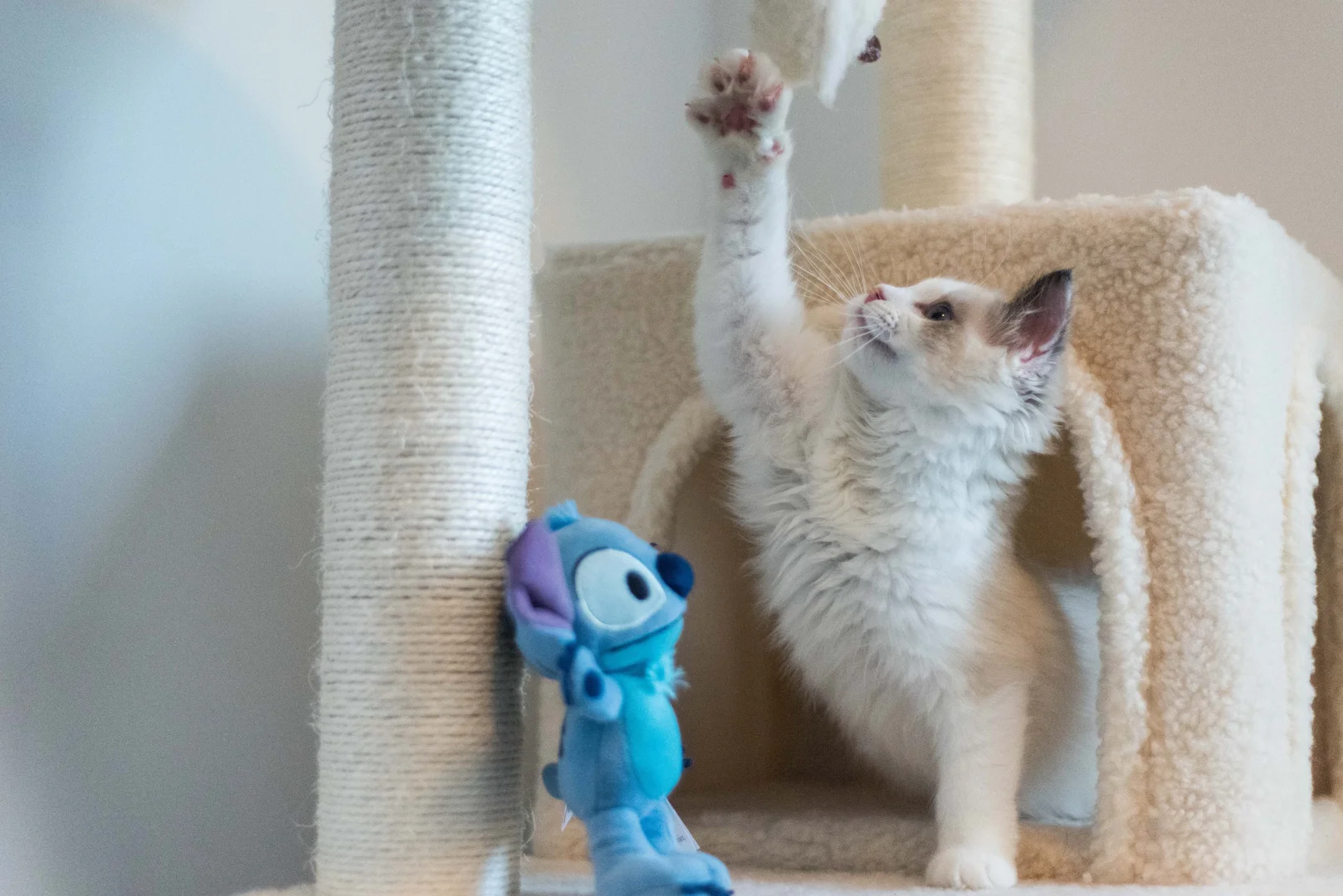
Use a wand toy or feather teaser near the scratching post to spark curiosity, letting your Kitten choose whether to approach, investigate, scratch, or move away at their own pace. Avoid guiding the toy in a way that forces climbing, gripping, or contact with the post. Supervise wand-toy play, then put the toy away afterward. Catnip or silvervine may help some Cats, but not all Cats respond, and young Kittens may not respond to catnip yet. Treats can also be used if food rewards motivate your Kitten, helping build positive associations with voluntary investigation or scratching.
Frequently Asked Questions About Kitten Scratching Posts
When should I introduce my kitten to a scratching post?
Introduce a scratching post as soon as your Kitten begins exploring and scratching. If you are bringing home a kitten, have suitable scratching surfaces available from the beginning. Scratching is a natural feline behavior, so the goal is not to teach it, but to offer safe, appropriate options. Choose scratchers that are kitten-sized, stable, easy to access, and inviting for voluntary exploration.
How do I redirect a kitten from carpets and sofas?
To redirect scratching away from furniture or carpet, place an appropriate scratching surface near the area your Kitten already uses. Try to match the texture and orientation they seem to prefer, such as vertical sisal, horizontal cardboard, or another sturdy surface. If you use double-sided tape or a furniture covering, keep it temporary and kitten-safe, with no entanglement or ingestion risk. Reward voluntary use with whatever your Kitten responds to best, such as treats, praise, or play, while keeping the scratching alternative easy to find.
What should I know before using catnip or silvervine with a young kitten?
Catnip sensitivity varies widely among individual Cats, and very young Kittens often show little or no response. Catnip and silvervine can be optional botanical enrichment, but they are not required to encourage scratching-post use, and neither is guaranteed to interest every Cat. Choose age-appropriate, Cat-safe products without additives or hazardous loose pieces, and do not assume every "natural" or "organic" product is safe. If you have questions about suitability, age, or your Kitten's health needs, ask your Care Team for guidance.
Supporting Your Kitten's Natural Scratching Behavior
Scratching is a normal, important feline behavior, and offering appropriate surfaces early gives your Kitten healthy ways to express it. Choose a stable scratcher in the right size and orientation, with materials your Kitten prefers, and place it near the resting, playing, or passing-through areas they already use. As your Kitten grows, keep observing what they choose and offer scratching opportunities that match those preferences.
For more guidance on feline wellness, kitten development, and behavior, explore our CatsOnly blog. Scratching is one part of understanding the whole Cat: their instincts, environment, growth, and preventive health. If you have questions about your kitten's health, behavior, development, or home setup, you can book an appointment with our Care Team at CatsOnly.
This article is for educational purposes and reflects general feline health information. It is not a diagnosis and does not replace an examination by a veterinarian who knows your Cat. Every Cat is an individual, and recommendations can change with age, history, and physical findings. If you notice a change from your Cat's normal baseline, or you have questions about your Cat's health, contact your veterinary Care Team. If your Cat is struggling to breathe, unable to urinate, or collapsed, seek veterinary care immediately.
Veterinary care designed entirely for Cats.
Most clinics accommodate Cats. We were built for them.
SHARE THIS ARTICLE:
Latest Articles