Kitten Nutrition: Feeding From Weaning to One Year
By CatsOnly Care Team • October 12, 2026
What Kittens Need for Healthy Growth
Cats are obligate carnivores, meaning they need specific nutrients that Cats are adapted to get from animal-based foods, but a kitten diet should not be judged by ingredients alone. According to the Purina Institute kitten nutrition guidance, kittens have higher nutritional and energy needs during rapid growth than adult Cats, so the key is choosing a complete and balanced food formulated for growth. Your veterinarian can help match food to your kitten’s age, development, body condition, and health needs, and you can learn more about nutrition at CatsOnly.
Kittens have specific nutrient needs for growth and development, including essential amino acids that must come from their diet. Rather than judging a food by ingredient lists or protein claims, use the Purina Institute kitten nutrition guidance as a reminder to look for a nutritional adequacy statement showing the food is complete and balanced for growth. Some all-life-stages diets may also meet growth requirements, and your Care Team can help confirm whether a specific food is appropriate for your kitten.
Protein, Fat, and Energy During Kitten Growth
Growing kittens have higher energy and nutrient needs than adult Cats because their bodies are developing quickly, which is why they should eat a complete and balanced diet formulated for growth. Purina Institute kitten nutrition guidance explains that growth diets are designed to support this stage. Protein provides essential amino acids for growth, while fat supplies concentrated energy and essential fatty acids for healthy development.
Kittens need essential amino acids from their diet, including taurine and arginine. Taurine is especially important in feline nutrition and supports functions such as vision and heart health, according to the Purina Institute kitten nutrition guidance. A complete and balanced diet formulated for growth should provide these amino acids in appropriate amounts, so Cat Parents should not add individual supplements unless directed by their veterinarian.
Other Nutrients That Support Kitten Growth and Development
Vitamins and minerals need to be provided in appropriate amounts and proportions during growth, not simply in higher quantities. Calcium and phosphorus, for example, both support developing bones, and a complete and balanced kitten diet formulated for growth is designed to provide them appropriately, according to Purina Institute kitten nutrition guidance. Avoid adding vitamin or mineral supplements unless your veterinarian recommends them.
Certain fatty acids also support development during kittenhood. According to the Purina Institute kitten nutrition guidance, docosahexaenoic acid (DHA), an omega-3 fatty acid, plays a role in brain and vision development in young Cats. Rather than adding DHA or other fatty-acid supplements independently, choose a complete and balanced diet formulated for growth and talk with your Care Team before adding supplements to your kitten’s diet.
How Feeding Changes From Weaning to 12 Months
As kittens grow, their feeding needs change. Monitoring weight, growth, and body condition over time helps your Care Team assess whether feeding amounts may need adjustment for the individual kitten, rather than treating body shape as a simple portion formula. The Purina Institute kitten nutrition guidance notes that age, body weight, and growth stage all matter, and CatsOnly takes the same individualized approach in our kitten care.
Young kittens may benefit from multiple feeding opportunities throughout the day as they grow. Offer measured portions, and adjust the amount and frequency based on your kitten’s development and the specific food they are eating. Package feeding guides are useful starting points, not individualized prescriptions, and your Care Team can help refine them based on growth, body condition, appetite, and individual needs.
Feeding Through Each Stage of Kitten Growth
Feeding patterns change as kittens progress from nursing to solid foods, move through weaning, and continue to grow. The following table provides general guidance on how feeding may change across kittenhood, based on guidance from the Purina Institute. Individual needs may vary based on development, health, weaning status, and the food being fed:
| Age Stage | General Feeding Pattern | Feeding Focus |
|---|---|---|
| 4 to 8 Weeks | Frequent small meals as weaning progresses, guided by the kitten’s readiness | Transition from nursing through weaning and toward solid food |
| 2 to 6 Months | Multiple daily meals, adjusted for growth and appetite | Complete and balanced nutrition formulated for growth |
| 6 to 12 Months | Regular meals adjusted with growth, activity, and body condition | Continue growth nutrition while monitoring growth and body condition |
During weaning, kittens gradually move from nursing to eating a complete and balanced food formulated for growth. Kitten food may first be softened with warm water or kitten milk replacer to make it easier to eat, then adjusted in texture as the kitten becomes comfortable with solid food. Young kittens may benefit from multiple small, predictable feeding opportunities throughout the day as they continue to grow.
Transitioning From Kitten Food to Adult Food
Many Cats transition from growth nutrition to adult nutrition around one year of age, but the right timing can vary by the individual Cat and breed. Some larger breeds may continue growing longer, so your Care Team can help decide when your Cat is ready for adult food. When changing diets, transition gradually at a pace that fits your Cat, the foods involved, and any health or dietary considerations to support acceptance and digestive tolerance.
CatsOnly clinical standards recommend sterilization by 5 months of age, as outlined in our approach to Kitten Care. Energy needs may change after spay or neuter, but kittens are still growing and should not automatically switch to adult food. Monitoring growth and body condition over time helps your Care Team decide whether feeding amounts should be adjusted while your kitten continues to receive appropriate growth nutrition.
Wet Food, Dry Food, and Hydration for Kittens
Both wet and dry growth formulas can provide complete and balanced nutrition for young Cats. Wet food adds more moisture through the diet, while fresh water should stay readily available no matter which format your kitten eats. Some Cats may prefer wide, shallow dishes, and appropriate puzzle feeders can create opportunities for foraging and other natural feline behaviors. Food and feeding setups should reflect the individual Cat’s preferences and needs.
Wet Food vs. Dry Food for Kittens
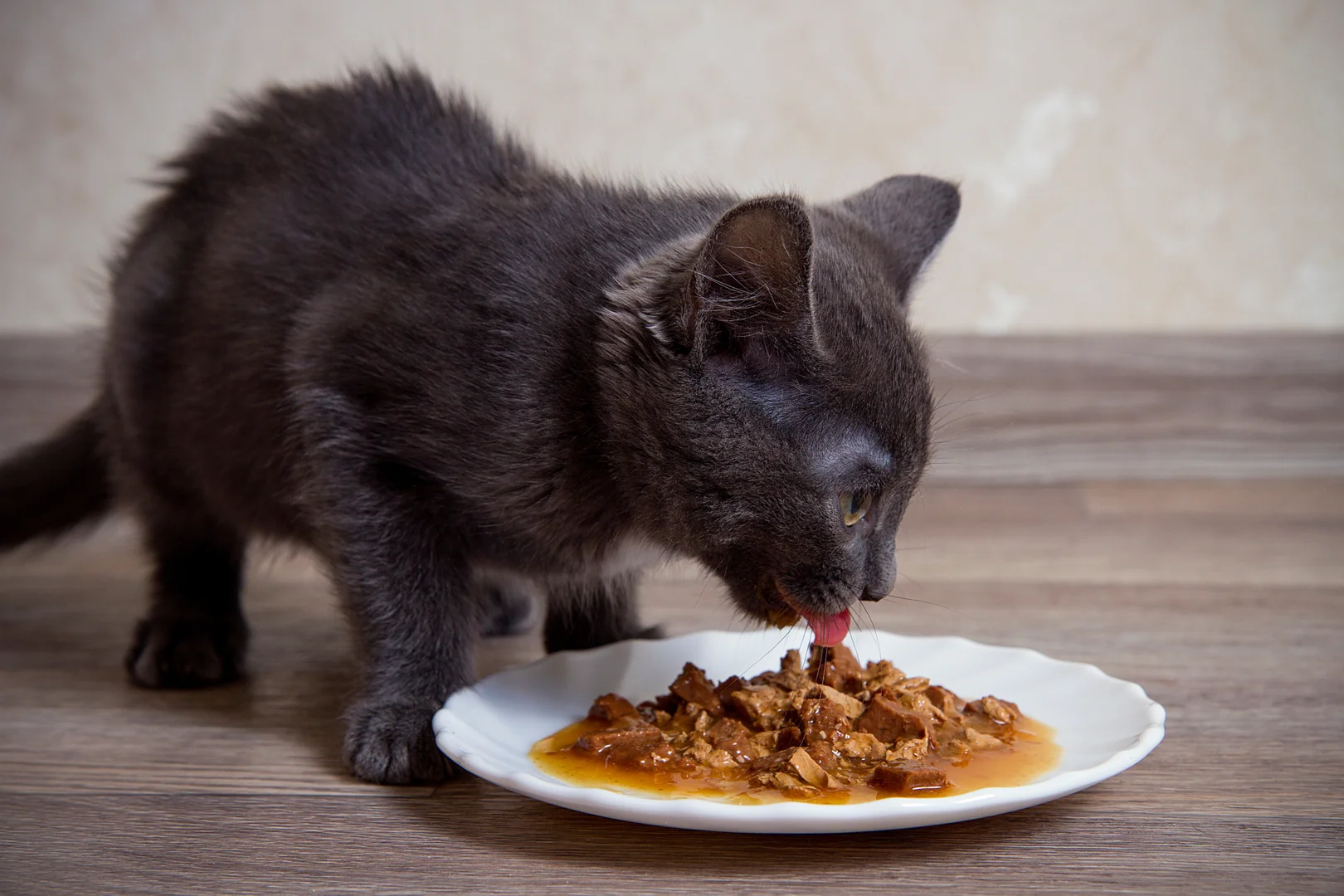
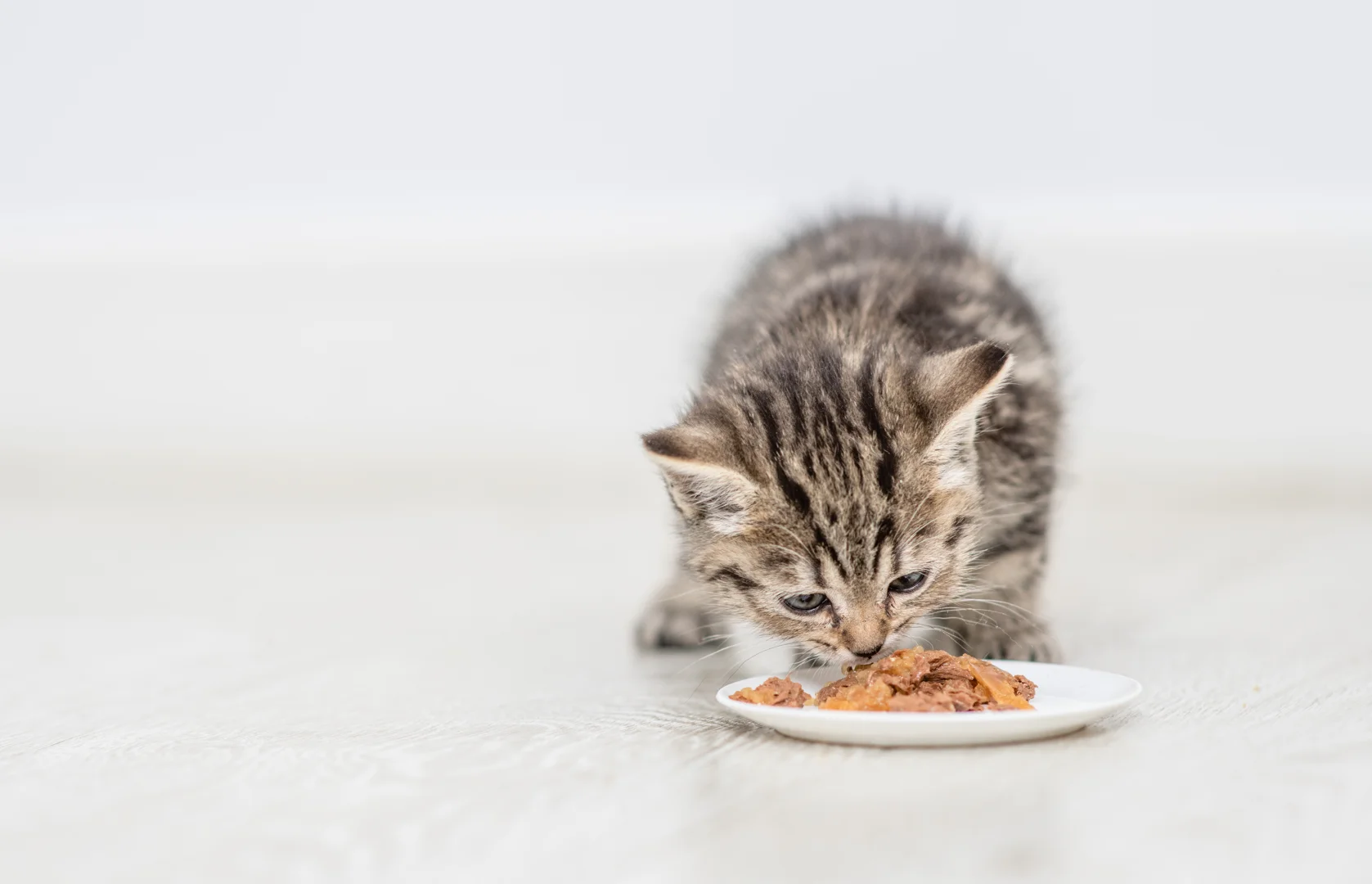
Wet food gives kittens additional water through their diet, though they still need fresh water available. According to the Purina Institute kitten nutrition guidance, introducing wet food or softened dry kitten food during weaning can help kittens experience different food forms and textures during development.
Dry kibble offers convenience and can be offered through appropriate puzzle feeders to provide foraging opportunities. Introducing different food textures early in life may help kittens become familiar with a variety of food formats later. Fresh, clean water should always be available in multiple locations, whether your kitten eats wet food, dry food, or both.
Foods and Feeding Practices to Avoid
Some human foods and feeding methods can pose serious health risks to kittens. According to the RSPCA feeding guidelines, foods including onions, garlic, chocolate, grapes, and raisins should not be fed to kittens. After weaning, Cats generally have a reduced ability to digest lactose, so cow’s milk can cause digestive upset, including diarrhea. Cow’s milk should not be confused with kitten milk replacer formulated for young kittens.
Raw diets can expose kittens and people in the household to potentially harmful pathogens, according to the RSPCA feeding guidelines. For everyday feeding, choose a diet with a nutritional adequacy statement showing it is complete and balanced for growth. This helps ensure the food is formulated for a growing kitten’s needs without asking Cat Parents to balance nutrients themselves.
Frequently Asked Questions About Kitten Nutrition
When can kittens begin eating solid food?
Weaning typically begins around 4 to 5 weeks of age, according to the Purina Institute kitten nutrition guidance. Kittens can start with a shallow dish of soft gruel made from complete and balanced kitten food formulated for growth mixed with warm water or kitten milk replacer, not cow's milk. Many kittens are fully weaned by around 8 weeks of age, although development can vary by kitten, according to the Purina Institute kitten nutrition guidance.
Can kittens eat adult maintenance cat food?
Kittens need food formulated to support growth and development, so a diet labeled only for adult maintenance is not appropriate as their primary food, according to the Purina Institute kitten nutrition guidance. Check the label for a nutritional adequacy statement showing the food is complete and balanced for growth, or for all life stages. The words "all life stages" are only useful when that adequacy statement confirms the diet meets growth needs.
How often should a growing kitten be fed each day?
Young kittens may benefit from several small feeding opportunities throughout the day. According to the Purina Institute kitten nutrition guidance, kittens under 6 months may be fed three to four meals per day, with feeding frequency gradually shifting to two to three meals per day from 6 to 12 months. Individual needs can vary based on age, development, health, and the food being fed.
Conclusion
A complete and balanced diet formulated for growth helps provide the nutrition your kitten needs as they develop. As your kitten grows, monitor their weight, appetite, and body condition, and work with your Care Team to decide whether feeding amounts should change. For more guidance, explore our kitten nutrition guidance, or book an appointment with us for individualized nutrition guidance as part of your kitten’s veterinary care and kitten wellness visits.
This article is for educational purposes and reflects general feline health information. It is not a diagnosis and does not replace an examination by a veterinarian who knows your Cat. Every Cat is an individual, and recommendations can change with age, history, and physical findings. If you notice a change from your Cat's normal baseline, or you have questions about your Cat's health, contact your veterinary Care Team. If your Cat is struggling to breathe, unable to urinate, or collapsed, seek veterinary care immediately.
Veterinary care designed entirely for Cats.
Most clinics accommodate Cats. We were built for them.
SHARE THIS ARTICLE:
Latest Articles