Cat Eye Discharge: What You Can Safely Do Before a Vet Visit
By CatsOnly Care Team • October 5, 2026
What to Do If Your Cat Has Eye Discharge
If your Cat has eye discharge, care at home before a veterinary exam should focus on safe supportive steps and observing changes, not diagnosing the cause or using eye products unless your veterinarian directs you. Before your Cat's exam:
- Wash your hands, then use a fresh clean pad dampened with veterinarian-advised sterile saline to gently soften and lift discharge from the skin and fur around the eye and eyelid edges, not the eye surface. Use a fresh pad for each eye.
- Do not force a swollen or crusted eye open, rub the eye, use human eye drops, ointments, home remedies, or leftover veterinary eye medication, even if it was previously prescribed for your Cat, unless your veterinarian directs you to use it for this problem.
- Contact the veterinary Care Team promptly if your Cat is squinting, holding the eye closed, pawing or rubbing, or has cloudiness, thick discharge, or discolored discharge. Seek urgent guidance for significant eye pain, trauma, sudden cloudiness or color change, inability to open the eye, marked swelling, or suspected eye injury.
Eye discharge can vary in amount, color, and consistency, but appearance alone cannot tell a Cat Parent what is causing it. Veterinary resources, including the Cornell Feline Health Center, discuss feline herpesvirus as one possible contributor to recurrent eye and upper-respiratory signs, with flare-ups possible after illness or environmental change. A veterinary exam is needed to identify the cause.
Home care can help you gently clean discharge from the surrounding fur and eyelids before an exam, but it cannot diagnose the cause or identify problems such as a scratch, ulcer, foreign material, or other eye issue without veterinary examination and testing. Our Care Team can help you describe what you are seeing, assess how urgently your Cat may need to be evaluated, and prepare for the visit.
Keeping Your Cat’s Eye Area Clean Before the Visit
Some eye redness or discharge can wait for the next available veterinary appointment, but other signs need faster guidance. Watch for squinting, pawing, cloudiness, swelling, blood, a closed eye, or symptoms that worsen quickly, especially in kittens, and contact your veterinary team promptly.
Before the exam, focus on gentle cleaning around the eye only and careful observation. Watch for changes in discharge, redness, swelling, squinting or holding the eye closed, rubbing or pawing, cloudiness, or changes in your Cat's usual behavior. Do not put anything in or on the eye, including flushes or compresses, unless your veterinarian specifically directs you to.
How to Safely Clean Discharge Around Your Cat’s Eye
Gently removing accumulated discharge from the skin and fur around the eye helps keep the area clean. If advised by a veterinarian, you may use sterile 0.9% saline to moisten a clean cotton pad or gauze square for cleaning around the eye.
Follow these steps for gentle cleaning:
- Wash your hands thoroughly with soap and water before and after touching your Cat's face.
- Use a separate, fresh cotton pad for each eye to avoid transferring discharge from one eye to the other.
- Gently wipe discharge from the eyelids and surrounding fur, moving from the inner corner area outward.
- Never wipe across or touch the surface of the eye, and do not pull or pick at dried crusts.
- If discharge is crusted, lightly moisten it so it can soften before gently wiping it away.
If your Cat pulls away or displays signs of discomfort, pause and give them space. Forcing the process can increase stress and raise the risk of accidental injury to the eye surface.
Helping Your Cat Before the Veterinary Exam
While you wait for the veterinary visit, keep the environment simple and low-irritant. Avoid obvious airborne irritants such as smoke, aerosols, strong fragrances, and dusty products.
Consider these supportive steps at home:
- Reduce obvious airborne irritants, such as smoke, strong fragrances, dusty cleaning products, or sprays near your Cat's resting areas.
- If your veterinarian approves a warm, damp compress, hold it gently near the closed eyelids. Do not press on the eye itself.
- Do not try to decide from discharge alone whether the problem is contagious. Ask the veterinary Care Team what household precautions make sense.
- If your Cat is rubbing or pawing at the eye, ask your veterinarian whether protective collar use is appropriate before the exam.
- Arrange veterinary evaluation promptly if discharge persists, worsens, or appears with squinting, cloudiness, swelling, or behavior changes.
Let your Cat rest where they normally feel comfortable, and watch for eye changes before the veterinary visit.
What Your Cat’s Eye Discharge Can Look Like
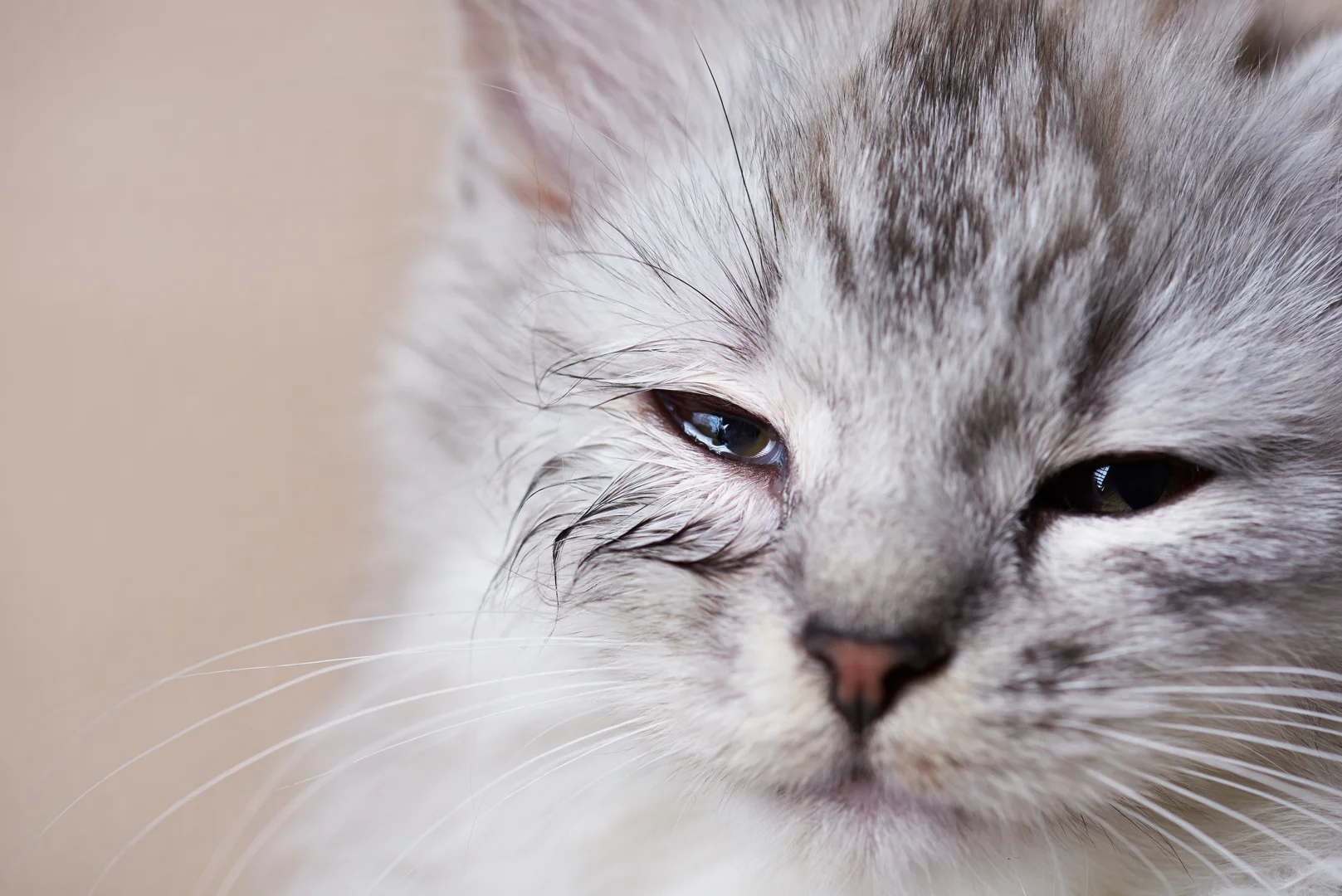
Eye discharge in Cats can range from clear and watery to thicker or discolored. Its appearance is useful information to share with your veterinarian, but color and consistency alone cannot determine the cause. A veterinary exam can help identify what is happening and whether additional testing is needed.
Eye discharge color alone cannot tell you the cause. Notice the color, thickness, amount, whether one or both eyes are affected, and any redness, swelling, squinting, or cloudiness. Share these details with your veterinarian, who may consider causes such as feline herpesvirus type 1 (FHV-1), Chlamydia felis , or other eye conditions.
| What You See | Other Signs to Notice | When to Contact the Veterinarian |
|---|---|---|
| Any discharge with squinting, holding the eye closed, cloudiness, visible eye changes, significant swelling, trauma, or obvious discomfort | One or both eyes affected, rubbing or pawing, light sensitivity, change in eye shape or surface | Seek prompt veterinary guidance. These signs should not be handled with home care alone |
| Clear, watery drainage | Amount increasing or staying mild, redness, sneezing, rubbing, one or both eyes affected | Contact the Care Team for guidance, especially if signs are new, worsening, or paired with discomfort |
| Mucoid, whitish discharge | Sticky buildup, eyelids matting, redness, swelling, rubbing, changes in the amount of discharge | Arrange veterinary guidance and an exam so the cause can be assessed |
| Yellow or green discharge | Thick discharge, eyelids stuck together, swelling, squinting, reduced activity or appetite | Contact your veterinarian promptly for evaluation |
| Brownish or rust-colored staining | Staining on the fur, chronic wetness, odor, skin irritation, one-sided versus both-sided tearing | Discuss with your veterinarian, sooner if staining increases or any discomfort appears |
Because different eye conditions can cause similar signs, a veterinary examination is the best way to determine what may be causing your Cat's eye discharge and what care is appropriate.
What Not to Put in Your Cat’s Eye
It can be tempting to reach for eye drops or ointments you already have at home after noticing your Cat’s eye discharge, redness, or squinting. Do not use human eye drops, leftover veterinary eye medications, or home remedies in your Cat’s eye unless your veterinarian specifically directs you to use them for the current problem. Eye medications are not interchangeable, and the right treatment depends on what is causing the eye signs.
Never use the following products on your Cat’s eye unless your veterinarian has specifically told you to do so:
- Human eye medications: Do not use human OTC eye drops or human antibiotic eye medications unless specifically directed by a veterinarian. Their ingredients, strengths, and formulations may not be appropriate for Cats.
- Leftover prescription eye medications: Do not reuse old drops or ointments from another pet, person, or past eye problem. Steroid eye drops can be contraindicated when corneal ulceration is present and may interfere with healing.
- Colloidal silver: Do not use colloidal silver for feline eye discharge. It is not established as a safe or effective treatment for feline eye disease.
- Home remedies and household products: Do not apply essential oils, tea tree oil, apple cider vinegar, hydrogen peroxide, or similar products in or around a Cat’s eye.
If a product has not been specifically recommended by your veterinarian for your Cat’s current eye problem, do not put it in or around the eye.
Maintaining a regular schedule of preventative feline care guidelines supports overall health and provides an established relationship with your Care Team when sudden eye concerns arise.
When Your Cat’s Eye Signs Need Prompt Veterinary Care
Some Cat eye conditions can worsen quickly, and signs that look minor at home may still need prompt veterinary care. Because different eye problems can look similar, knowing which changes are prompt versus urgent helps your Cat get appropriate care without unnecessary delay.
Signs that warrant prompt veterinary assessment include:
- Urgent or emergency evaluation: holding one or both eyes closed, or persistent squinting.
- Urgent or emergency evaluation: cloudiness, a bluish appearance, or a visible change to the surface of the eye.
- Urgent or emergency evaluation: blood in or around the eye.
- Urgent or emergency evaluation: known or suspected eye trauma or injury.
- Prompt veterinary assessment: a new or pronounced appearance of the third eyelid.
- Prompt veterinary assessment: repeated pawing or rubbing at the eye.
- Prompt veterinary assessment: lethargy, reduced appetite, or nasal discharge along with eye discharge.
If you notice these concerning changes, review our feline emergency triage signs to recognize signs that may require emergency care, then contact CatsOnly for guidance. During hospital hours, Cat Parents can call our Feline Experience Specialists. If we are unable to answer, or if it is after hours, calls are automatically connected to a licensed Registered Veterinary Technician (RVT) who can triage your Cat and guide next steps. CatsOnly is not a 24-hour emergency hospital, so when emergency care is indicated, seek immediate care through Veterinary Emergency Group (VEG), our 24/7 emergency partner.
What to Expect at the Vet and What Eye Care May Cost
When your Cat comes to our veterinary hospital for an eye concern, your veterinarian will examine the eye and may recommend diagnostic tests based on what they find. One commonly used test is fluorescein staining, which can help identify damage to the surface of the cornea, including corneal ulceration.
Depending on exam findings, your veterinarian may recommend tests such as tonometry, which measures pressure inside the eye, or a Schirmer tear test, which measures tear production. In selected cases, ocular swabs may help investigate possible infectious contributors. Treatment depends on the diagnosis and may include topical or systemic medications chosen for your Cat’s specific condition.
Our Care Team will review recommended diagnostics, treatment options, and associated costs with you so you understand the plan, have room to ask questions, and can decide together before moving forward.
Frequently Asked Questions About Cat Eye Discharge
Can a Cat eye infection heal on its own without medication?
Whether eye discharge goes away on its own depends on what is causing it. Different eye conditions can look similar at home, so discharge appearance alone cannot tell you whether waiting is safe. If your Cat is squinting or holding the eye closed , has cloudiness or another visible eye change , significant swelling, repeated rubbing or pawing, or a known or suspected eye injury, contact your veterinary Care Team promptly.
Is feline conjunctivitis contagious to other animals or humans?
The contagiousness of conjunctivitis depends on the underlying cause. Some infectious causes, including feline herpesvirus-1, can spread between Cats, while other eye problems are not contagious at all. Feline herpesvirus-1 is considered species-specific, so it is not expected to infect humans. Rare zoonotic transmission has been reported with some organisms, such as Chlamydia felis , but this is uncommon. Until the cause is known, wash your hands after handling eye discharge and ask your veterinary Care Team whether any household precautions are appropriate for other Cats, pets, or people.
Why are eye problems more urgent in kittens?
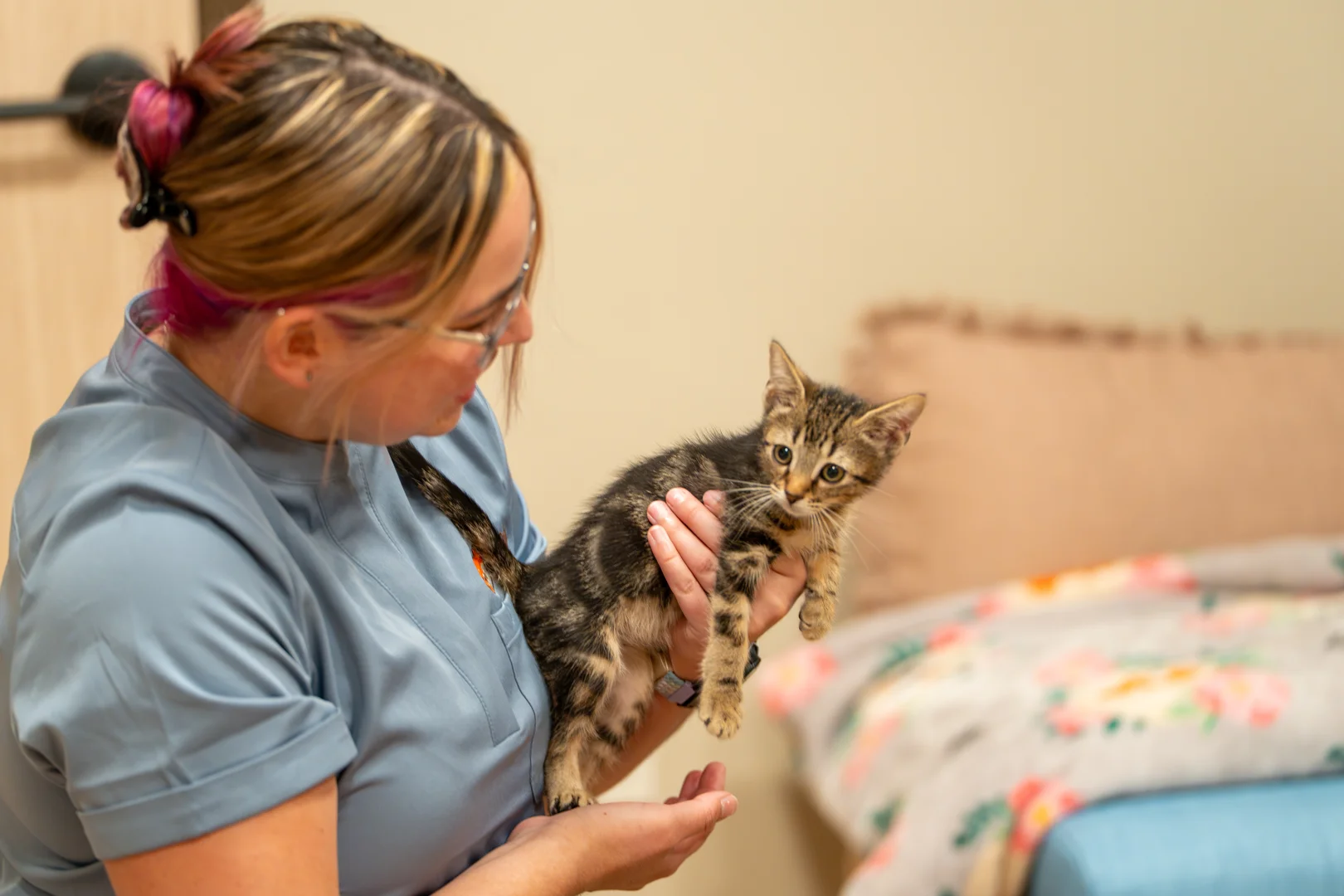
Eye problems in kittens deserve prompt attention because some infections and inflammatory eye conditions can affect the cornea and developing eye structures. In more severe cases, kittens can develop corneal ulceration or adhesions between tissues around the eye, known as symblepharon . If a kitten has eye discharge with swollen eyelids , squinting or holding the eye closed , cloudiness , or another visible eye change, contact your veterinary Care Team promptly.
Conclusion
If your Cat has eye discharge, safe supportive steps at home can help you care for the area while you watch for changes, but they do not replace a veterinary examination when one is needed. At CatsOnly, our PEACE Method™ and Feline BioBehavioral Care Standards™ guide eye evaluations that respond to the individual Cat throughout the visit.
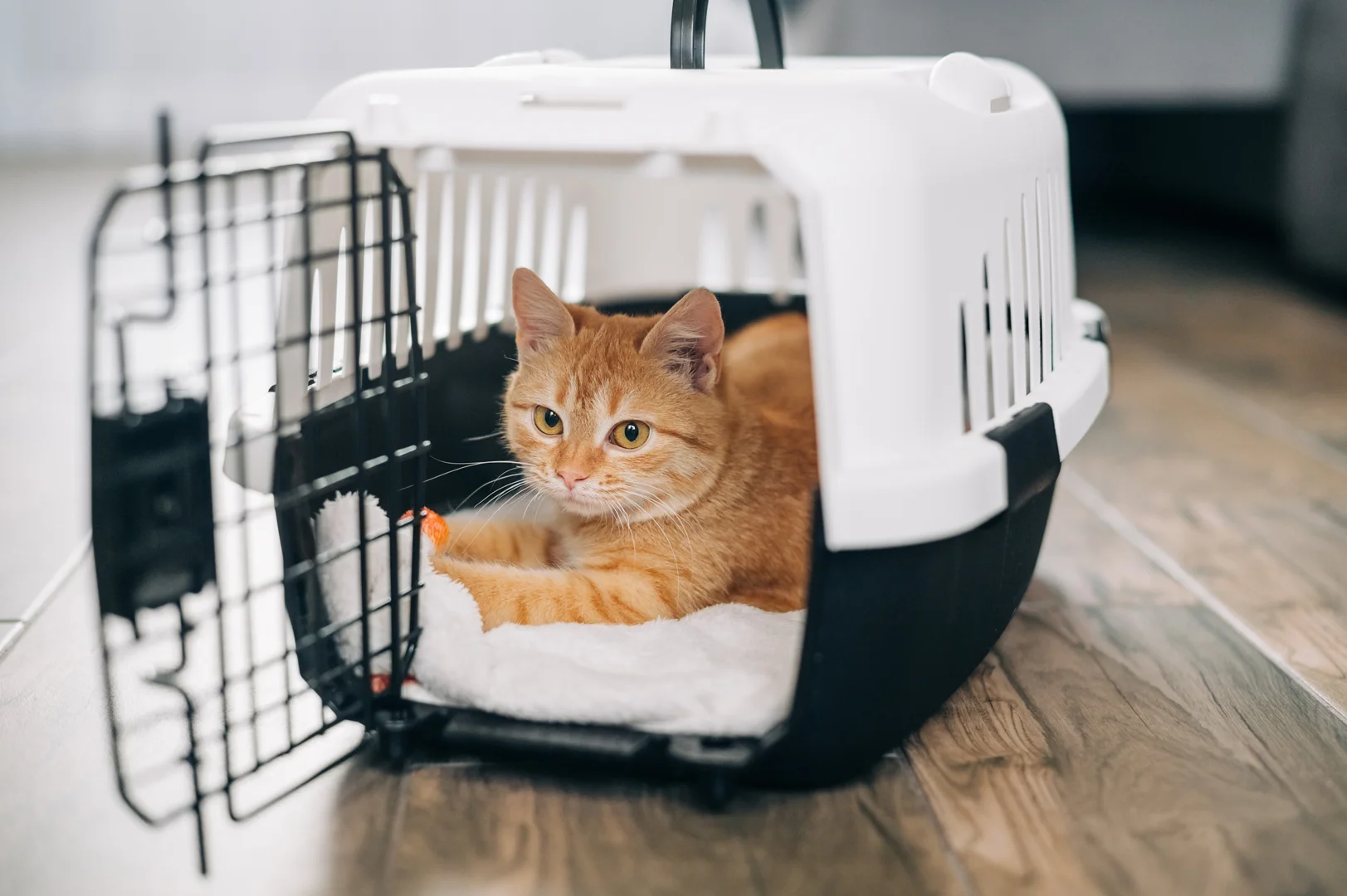
At CatsOnly, our Care Team adjusts the examination to the individual Cat, including examining them in an open carrier base, on a soft padded surface, or on the floor when appropriate. If you notice eye discharge, squinting, or another concerning change to your Cat’s eye, book an exam at CatsOnly so we can evaluate what is happening and determine the appropriate next steps.
This article is for educational purposes and reflects general feline health information. It is not a diagnosis and does not replace an examination by a veterinarian who knows your Cat. Every Cat is an individual, and recommendations can change with age, history, and physical findings. If you notice a change from your Cat's normal baseline, or you have questions about your Cat's health, contact your veterinary Care Team. If your Cat is struggling to breathe, unable to urinate, or collapsed, seek veterinary care immediately.
Veterinary care designed entirely for Cats.
Most clinics accommodate Cats. We were built for them.
SHARE THIS ARTICLE:
Latest Articles