

A Beginner's Guide to Daily Cat Health and Happiness
By CatsOnly Care Team • October 13, 2026
Building a Predictable Daily Routine for Your Cat
The most useful cat care tips for beginners are simple: offer safe spaces where your Cat can hide, retreat, and rest, complete and balanced nutrition appropriate for the Cat's life stage, fresh water, clean litter boxes, daily play and scratching, gentle handling, and regular veterinary care. Keep key resources easy to reach and separated when needed, respect your Cat's senses, make interactions positive and predictable, and watch for changes from their usual appetite, activity, or litter-box habits.
The small habits you build now can support your Cat through every life stage. That starts with seeing the home from your Cat’s point of view: places to rest, chances to play, freedom to choose where they go, and interaction that fits their comfort level. This guide walks through the basics, from the first days at home to everyday wellness.
This guide walks you through practical ways to understand your Cat’s needs and make informed everyday care decisions.
Preparing a Safe Space for Your New Cat
Welcoming a new feline companion into your home is an exciting milestone. Preparing a dedicated safe room, or starter room, before arrival gives your Cat a smaller, familiar-feeling space to adjust to new sights, sounds, scents, and surroundings. Whether you are bringing home an adult feline or focusing on early new kitten preparation, include essentials like food, water, and litter boxes with appropriate separation, plus hiding spots and soft resting places so your Cat can settle in at their own pace.
Keep their carrier accessible in this room when practical, with the door safely secured open and soft bedding inside. Positive, voluntary experiences, like resting near or inside it by choice, can help your Cat build familiarity and more comfortable associations over time, which may make carrier use and travel easier.
Creating Safe Spaces for Your Cat
Cats use space three-dimensionally, so safe spaces should include more than floor-level beds. Cat trees, sturdy perches, and window hammocks can give some Cats places to observe the room, rest, and choose distance from activity, as long as access is safe and everything is stable. Because preferences and mobility vary, offer resting and hiding options at different heights.
Pair elevated perches with enclosed, quiet hiding and resting spots in several locations, such as covered beds or cardboard boxes. This gives your Cat choices in height, privacy, and distance. A synthetic feline pheromone diffuser in the basecamp may be an optional support, but it is not required. For general home-care basics, the General Cat Care | ASPCA guide is a helpful reference.
Setting Up Your Cat's Litter Boxes
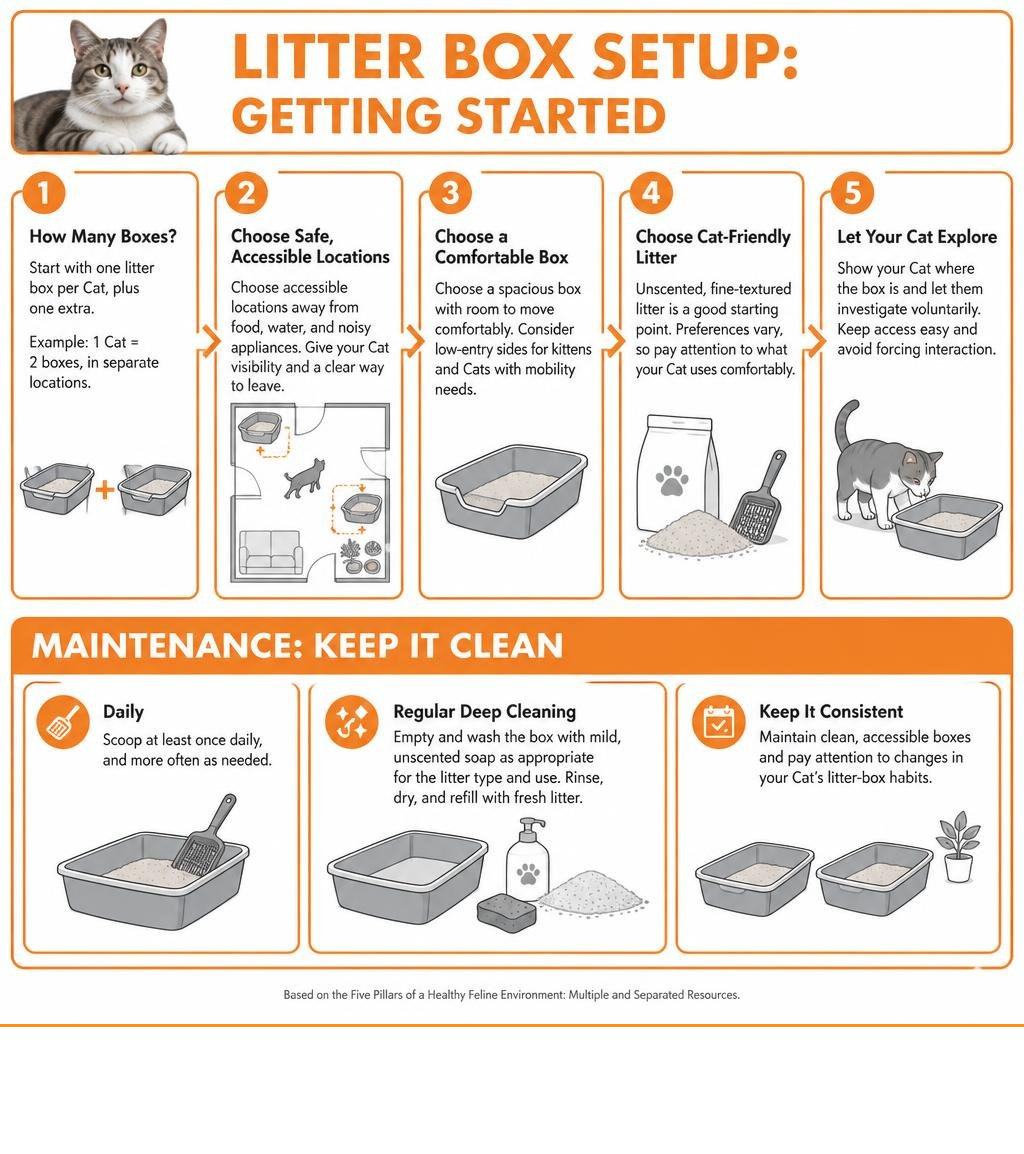
Litter box location, size, and quantity should match your Cat's needs, preferences, and comfortable access while supporting multiple, separated resources:
- Litter Box Number : Start with the common guideline of one litter box per Cat, plus one extra. Place boxes in separate, accessible locations instead of grouping them together.
- Strategic Placement : Choose quiet, easy-to-reach spots away from food, water, noisy appliances, and heavy traffic. Avoid isolated areas or dead ends, and give your Cat visibility and escape options.
- Box Dimensions and Entry : Pick generously sized boxes that let your Cat turn around and dig comfortably. Many Cats prefer uncovered boxes, but preferences vary. Low-entry sides can help kittens, senior Cats, and Cats with mobility limits.
- Litter Selection : Unscented litter is a sensible starting point. Different Cats may prefer different textures, so choose a litter that fits your Cat's age, comfort, and circumstances.
- Cleaning Routine : Scoop waste daily, and fully clean and replace litter based on the litter type, manufacturer guidance, box use, and your Cat's needs.
Essential Cat Care Tips for Beginners: Daily Nutrition and Hydration for Your Cat
Cats are obligate carnivores, which means their bodies are built to get key nutrients from meat-based diets. They cannot make enough of some nutrients on their own, including taurine, which supports heart and eye health. Choose complete, balanced food formulated for your Cat's life stage.
When choosing meals, look for the AAFCO nutritional adequacy statement on the packaging. It helps Cat Parents identify foods labeled complete and balanced for the appropriate life stage, but AAFCO does not approve or certify Cat foods. The statement explains the basis for the manufacturer’s nutrition claim. Our balanced feline nutrition guide can help you prepare for a Care Team conversation about wet food, dry food, or a combination.
Feeding Schedules and Portion Sizes
Feeding routines should fit your Cat’s life stage, health, preferences, and nutritional needs. Kittens usually need more frequent feeding opportunities than adults. Food packaging is a starting point for portions, but body condition, weight trends, activity, and veterinary guidance matter more over time. Measured meals can help Cat Parents see what their Cat actually eats. Unmeasured free-feeding may make appetite changes harder to spot, especially in multi-Cat homes. Treats can support bonding and enrichment, but keep them modest.
| Life Stage (General Guidepost) | Feeding Routine Considerations | Primary Nutrition Focus | Portion Strategy |
|---|---|---|---|
| Kittens (under 6 months) | Usually need more frequent feeding opportunities than adults, based on age, appetite, health, and routine | Complete and balanced nutrition formulated for growth | Monitor appetite, weight gain, stool, and body condition as they grow |
| Juveniles (6-12 months) | Feeding amounts and frequency may change as development slows, but needs are still kitten-focused | Growth nutrition remains important until a transition is appropriate | Recheck portions over time and watch weight trends and body condition |
| Adults (1-10 years) | A predictable routine helps, but meal timing should fit the Cat's needs and preferences | Complete and balanced adult nutrition suited to the individual Cat | Set feeding amounts using body condition, weight trends, activity, and veterinary guidance |
| Seniors (10+ years) | Appetite, chewing comfort, and routine may change with age or health status | Nutrition should reflect health, body condition, muscle condition, appetite, and diagnosed medical needs | Track intake, weight, muscle condition, and changes over time before adjusting the diet |
Encouraging Hydration and Whisker Comfort
Cats evolved to get much of their water from prey, so moisture in food can support overall water intake. Wet food provides more dietary water than dry food, but fresh drinking water matters with any complete, balanced diet.
Cats rely on sensitive whiskers and individual preferences, so offer stable, clean ceramic or stainless steel bowls. Wide, shallow bowls may suit some Cats, while others do fine with deeper bowls. Place fresh water in multiple accessible spots, separate from food and litter boxes. A fountain can help if your Cat prefers moving water, but many Cats prefer still water.
Grooming and Handling Your Cat
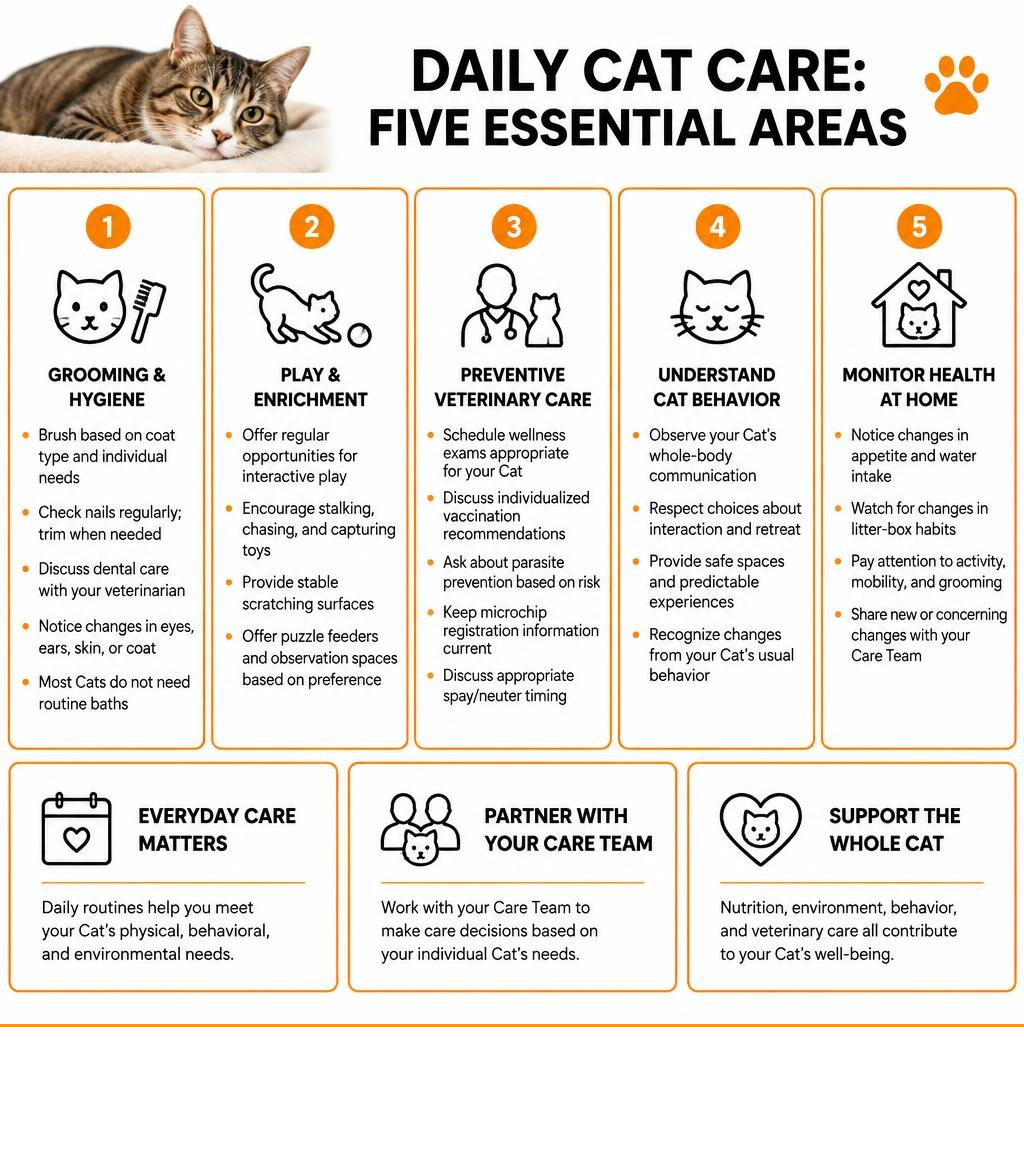
Grooming needs vary by coat type, age, mobility, health, and your Cat's tolerance. Gentle, voluntary brushing can remove loose fur and may reduce how much hair your Cat swallows. It also gives you a chance to notice coat changes, skin irritation, lumps, parasites, or sensitivity to touch, then contact your Care Team if something seems off.
Grooming and handling go best when you read your Cat as a whole, in context, and notice changes from their usual patterns. Resources on understanding cat behavior can help you recognize signs of comfort, uncertainty, or a desire to disengage, then offer choice, allow breaks, and adjust based on your Cat's response.
Everyday Grooming and Hygiene
Your Cat's grooming needs will depend on their coat, age, health, and comfort with handling. Here are a few everyday care considerations:
- Coat Brushing : Brush based on your Cat's coat and comfort. Long-haired Cats often need more help to prevent tangles and mats, while short-haired Cats may need less. Age, mobility, and health can change grooming needs.
- Nail Care : Offer sturdy scratching surfaces as part of normal nail care. When trimming is needed, use Cat-appropriate clippers and trim only the clear tip, avoiding the pink quick.
- Professional Dental Care : Home dental care helps reduce buildup, while veterinary dental evaluation checks for disease below the gumline. Use Cat-safe toothpaste, never human toothpaste, and ask about comprehensive feline dental care. At CatsOnly, our standard includes annual COHATs beginning at age two, with full-mouth intraoral radiographs.
- Ear and Eye Checks : Notice changes like discharge, odor, redness, swelling, or sensitivity. Do not clean inside the ear canal. Gently wipe discharge around the eye only, and ask your Care Team about new or persistent eye discharge.
- Bathing Realities : Most healthy Cats do not need routine baths. If your Cat gets something unusual on their coat, contact your Care Team before bathing, since some substances may be hazardous.
For more veterinary insights on baseline grooming, explore educational resources on Choosing and Caring for Your New Cat.
Interactive Play and Mental Stimulation
Play supports physical activity and gives your Cat a safe outlet for natural predatory behaviors. Choose interactive options that fit your Cat's age, health, mobility, and interests, such as wand toys, feather teasers, or soft balls. Let your Cat choose the pace, whether that means stalking, chasing, pouncing, or simply batting from a comfy spot. When possible, allow a successful "capture" to make play more satisfying.
Offer stable, appropriately sized scratching surfaces, both vertical and horizontal, so your Cat can stretch, maintain claws, and scent mark. Window perches can support observation and exploration. Puzzle feeders may encourage food-seeking and problem-solving, but introduce them gradually. Leave out only safe, individual-appropriate toys, and put wand toys, loose strings, and feathers away after supervised play.
Preventive Veterinary Care for Your Cat
Preventive veterinary care is an essential part of lifelong Cat health. Cats may show subtle signs of illness or discomfort, so wellness exams help veterinarians evaluate overall health, identify changes, and make individualized recommendations. Depending on your Cat’s age, medical history, lifestyle, prior vaccines, exposure risk, local laws, and veterinary judgment, preventive care may include physical examinations, weight and body condition assessments, vaccinations, and parasite prevention guided by geographic and lifestyle risk.
Microchipping gives your Cat a lasting form of identification that can help reunite them with you if they are found and scanned. It is not a GPS tracker, so registration and current contact details matter. Spaying or neutering should be discussed with your veterinarian, since timing and benefits vary by Cat. When medically appropriate, CatsOnly's clinical standard is sterilization by five months. For guidance that considers life stage, history, behavior, and lifestyle, see our preventative care guidance.
Recognizing Changes in Your Cat's Health and Behavior
Because behavior is communication, changes in routine can be useful clues. They may reflect medical, environmental, social, or emotional factors, sometimes together. When changes are new, sudden, persistent, or concerning, note what you see and ask your veterinarian to evaluate possible causes. Keep an eye out for:
- Changes in Appetite or Thirst : Eating less, drinking significantly more water, or seeming reluctant to chew.
- Litter Box Variations : Changes in urination, defecation, or litter-box use. Repeated attempts to urinate with little or no urine need immediate veterinary care.
- Energy and Mobility Shifts : Changes from your Cat's normal activity, resting, hiding, jumping, or movement patterns.
- Grooming Alterations : Increased grooming, reduced grooming, or a suddenly unkempt, greasy, or matted coat.
These are observations to share with a veterinarian, not a symptom-to-diagnosis checklist.
For more guidance on understanding your Cat's everyday health and preparing for veterinary visits, explore our feline wellness resources.
Frequently Asked Questions About Beginner Cat Care
How many litter boxes do I need for my cat?
A useful starting point is one litter box per Cat, plus one extra. For one Cat, that usually means two boxes in separate locations. Location, accessibility, cleanliness, and your Cat’s preferences matter just as much as the total number.
How much does monthly cat ownership typically cost?
Monthly Cat care costs vary by location, diet, age, health needs, and lifestyle. Plan for predictable expenses like quality food, litter, enrichment toys, scratchers, bowls, and cleaning supplies. Also budget for routine veterinary care, including wellness exams, vaccines, dental care, and parasite prevention based on your Cat’s risk. CatsOnly Membership is an optional way to plan for routine care through defined benefits, but it does not cover every preventive service or unexpected medical expense. Pet insurance may help with eligible illness, injury, or urgent care costs, depending on the policy.
How do I know if my new cat is adjusting well?
Adjustment looks different for every Cat. Some Cats explore right away, while others need more time, quiet, and easy ways to retreat. Instead of relying on one behavior, watch the whole Cat over time: eating, drinking, litter-box use, resting, gentle exploration, and voluntary interaction at their own pace.
A Cat does not need to be outgoing, playful, or physically affectionate to be settling in well. Calm routines, predictable spaces, and choice often matter more than quick affection. If you notice significant changes in appetite, drinking, elimination, hiding, activity, or behavior, contact your veterinary Care Team for guidance rather than assuming it is just part of the adjustment process.
Conclusion
Caring for a Cat starts with learning who they are, then supporting that individual every day. Appropriate nutrition, separated food, water, litter, and resting areas, safe spaces, natural play and scratching, predictable interactions, and preventive veterinary care all build trust. Watch their communication, offer choices, and adjust your touch, play, and routines to their response.
At CatsOnly, we use our Feline BioBehavioral Care Standards™ to connect what Cats need at home with what they need in the clinic: care shaped by feline biology, behavior, environment, and sensory comfort. When you are ready for the next step, schedule a wellness exam with our Care Team.
This article is for educational purposes and reflects general feline health information. It is not a diagnosis and does not replace an examination by a veterinarian who knows your Cat. Every Cat is an individual, and recommendations can change with age, history, and physical findings. If you notice a change from your Cat's normal baseline, or you have questions about your Cat's health, contact your veterinary Care Team. If your Cat is struggling to breathe, unable to urinate, or collapsed, seek veterinary care immediately.
Veterinary care designed entirely for Cats.
Most clinics accommodate Cats. We were built for them.
SHARE THIS ARTICLE:
Latest Articles