Understanding Your Cat’s Behavior: What Changes May Mean
By CatsOnly Care Team • September 29, 2026
How to Understand What Your Cat's Behavior Is Telling You
Cat behavior is communication, and changes can provide useful information about your Cat. Start by noticing what has changed from your Cat's usual routine, then consider the whole Cat and context: posture, facial expression, movement, surroundings, and access to key resources such as food, water, litter boxes, resting areas, and play. New, significant, or concerning changes in toileting, appetite, grooming, activity, or social interaction may warrant veterinary evaluation, especially when paired with other health or routine changes, because medical conditions can contribute to behavior changes, according to the MSD Veterinary Manual.
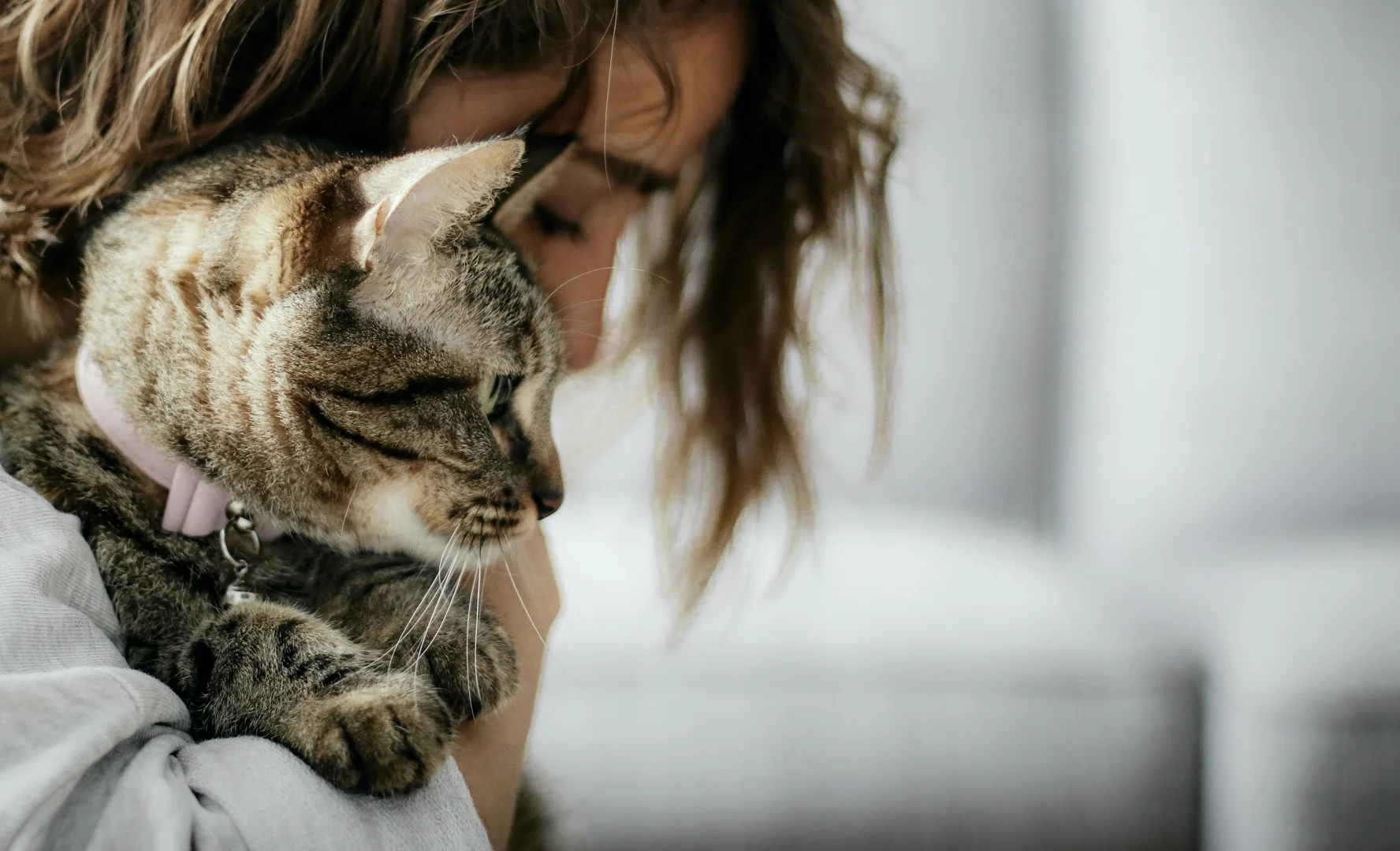
Watch the whole Cat, not one signal alone. Posture, ear position, tail position, facial expression, movement, vocalization, and interaction can all offer clues, but their meaning depends on the whole Cat, the situation, and what changed from that Cat’s behavior moments before. Hiding or sudden avoidance are especially useful changes to notice, but they do not point to one single emotion or medical cause. In a 2020 Scientific Reports study, Cats responded and approached differently after slow-blink interactions, suggesting slow blinking may play a role in positive Cat-human communication rather than proving a universal calming signal.
The CatsOnly Care Team can help you understand changes in your Cat’s usual behavior and decide when veterinary evaluation may be appropriate.
Understanding Your Cat’s Behavior and Body Language
Understanding feline habits begins with knowing species-typical Cat behavior, while remembering that every Cat is an individual. Many Cats may be more active around dawn and dusk, but activity patterns are flexible and can change with age, environment, health, and household routine. The authors of a standardized feline ethogram describe 117 behaviors in their catalog, which is a helpful reminder that Cats have a broad behavioral repertoire. An ethogram describes what a Cat is doing. Interpreting what it means takes observation, context, and the surrounding behaviors, not a fixed meaning assigned to one action.
Common patterns in feline daily behavior often include long rest periods and regular self-grooming, though each Cat’s routine can vary substantially. Veterinary behavior literature describes rest and grooming as important parts of feline behavior, not benchmarks every Cat must match. When Cat Parents learn their own Cat’s usual sleeping, grooming, activity, eating, litter-box use, and social interaction patterns, they are better positioned to notice meaningful changes.
Understanding Posture and Tail Position in Context
A Cat’s posture and movement can offer useful behavioral clues, but they make the most sense in context. Tail position is one part of that picture. For example, an upright tail is commonly associated with friendly or social approaches in some situations, according to feline welfare guidance from Cats Protection. A low, tucked, or still tail should be read alongside posture, movement, facial expression, environment, and what happened just before.
Ear position and facial expression add context when reading your Cat, but they do not work like a fixed dictionary. Forward-facing, turned-back, or flattened ears can appear in different situations, so watch the whole Cat and the environment. Also note facial changes, such as narrowed eyes, a tight muzzle, or unusual whisker position. Facial bunting, where a Cat rubs their cheeks against furniture or people, can deposit scent from facial glands. Ears, face, posture, tail position, and movement are best interpreted together and in context.
Understanding Your Cat's Vocalizations
Feline vocal signals serve many purposes and can vary by context, individual learning, and the Cat’s usual communication style. Purring often occurs during contentment and nursing, but Cats may also purr in other circumstances, including when they are painful or stressed, according to the Merck Veterinary Manual. Adult Cats commonly use meowing in Cat-human communication, so meaningful changes in how often a Cat vocalizes, which sounds they make, when it happens, or what is happening around them may be useful to share with the Care Team.
Vocalizations make the most sense in context. Chattering is often seen when a Cat watches birds or other potential prey, but the sound alone does not prove a specific internal state. Hissing and growling can function as distance-increasing communication, so they should be respected. Do not punish these sounds or push through them. When safe and clinically appropriate, pause the interaction and give the Cat space. Notice what happened before the sound, the Cat’s body language, and whether this differs from that Cat’s usual response.
Common Problematic Behaviors and Root Causes
When Cat Parents notice behavior changes, the cause may be medical, environmental, social, or a mix of factors. Understanding the natural social dynamics and group structure of domestic cats can help explain some multi-Cat interactions, but household changes affect Cats differently. Support starts with appropriate, predictable access to separated resources: food, water, litter boxes, resting and hiding spaces, scratching areas, and other essentials.
Redirected frustration may be considered when a Cat becomes aroused by something they cannot access, such as an outdoor animal seen through a window, then shows a sudden behavioral response toward a nearby person or animal. Early social experience can influence later comfort with unfamiliar people or objects, but genetics, maternal influences, later experiences, environment, and the individual Cat also matter. Start by noting what happened before, during, and after the behavior, while your veterinarian or a qualified feline behavior professional helps rule out medical contributors and interpret next steps.
Changes in Litter Box Use and Elimination
Changes in litter box use or elimination outside the litter box deserve attention. FelineVMA and ISFM feline veterinary guidance indicates that medical contributors, including feline lower urinary tract disease, arthritis or other mobility changes, and gastrointestinal conditions, should be considered first. Veterinary evaluation helps determine whether medical, environmental, resource, social, litter-box, behavioral, or multiple factors are involved.
Medical causes should be considered first, but the Cat’s litter box setup, resources, and environment can be evaluated at the same time. Substrate, box size and style, cleanliness, and location may all matter. Many Cats prefer fine, unscented clumping litter, but individual preferences vary. Boxes should be easy to access, separated from food and water, and placed where the Cat can use them without unnecessary disturbance or resource conflict.
Understanding Scratching Behavior
Scratching is a normal, species-typical feline behavior, not a habit to eliminate. Veterinary behavior resources describe scratching as a way Cats can condition their claws by loosening outer sheaths, stretch muscles in the shoulders and back, and leave visual marks plus scent from glands in the paws. When Cats scratch furniture, it may mean the location, orientation, material, size, or stability of available scratching surfaces does not match that individual Cat’s preferences.
To support scratching in more appropriate locations, place stable scratching options near the furniture or area your Cat already chooses. Feline behavior guidance from FelineVMA and ISFM supports offering choices that match the individual Cat’s preferences: vertical, horizontal, or angled surfaces, varied materials, sizes, stability, and locations. If needed, use gentle temporary barriers, such as washable covers or furniture guards, and reinforce your Cat when they choose the new surface.
Understanding Inter-Cat Tension
Inter-Cat tension can reflect medical issues, environmental changes, social dynamics, past experiences, individual temperaments, or limited access to resources. It may be subtle and never become a fight. Watch patterns over time: repeated doorway blocking, staring, chasing, or changes in how either Cat reaches food, water, litter boxes, resting spots, or pathways. The Five Pillars of a Healthy Feline Environment supports multiple, separated resources so each Cat has safe access.
Managing inter-Cat friction often starts with Multiple & Separated Resources, giving each Cat separate access to key resources in ways that fit the Cats, home, and where tension occurs. Gradual reintroduction may include scent exchange and managed visual access, when appropriate, while avoiding forced interactions and moving at a pace guided by the individual Cats’ responses. Positive rewards can support calmer associations, but they do not guarantee resolution. If tension is new, significant, or escalating, medical contributors should also be considered, especially when one Cat’s behavior has changed unexpectedly.
When a Change in Behavior May Need Veterinary Attention
CatsOnly’s behavioral medicine approach starts by evaluating behavior changes for possible medical contributors before focusing on environmental, social, or emotional factors. Pain, metabolic disease, and sensory changes can sometimes show up as changes Cat Parents notice at home. The MSD Veterinary Manual notes that veterinarians should consider medical conditions when assessing feline behavior concerns.
A new or meaningful change from what is typical for your Cat, such as sleep, vocalization, activity, interaction, grooming, or litter-box habits, may be useful information. Share these observations with your veterinarian, who can evaluate whether a medical condition may be contributing.
Behavior Changes That May Accompany Pain or Discomfort
Cats may show subtle signs of illness or physical discomfort. New or meaningful changes from your Cat’s normal baseline, such as resting posture, changes in litter box use, reduced jumping or mobility, activity, or social interaction, are important observations to share with the veterinarian.
The table below highlights behavior changes Cat Parents may notice and why they can be important to discuss with a veterinarian:
| What You May Notice | Why It May Be Worth Discussing With Your Veterinarian |
|---|---|
| Changes in posture or resting , such as spending more time hunched, keeping the head lowered, squinting, or resting in positions that are unusual for that Cat | Posture and resting changes can have medical, stress-related, or environmental contributors, so your veterinarian can help evaluate what may be behind the shift. |
| Changes in social interaction , such as sudden withdrawal, hiding more than usual, avoiding touch, or hissing when handled | A change in sociability does not prove a cause, but it can be meaningful when it differs from that Cat's usual pattern and is worth describing during an exam. |
| Changes in grooming , such as focused licking that leads to hair loss, grooming much less than usual, or developing an unkempt or matted coat | Grooming changes may be linked to medical or behavioral factors, and your veterinarian can help sort through possible contributors. |
| Changes in litter box use , such as urinating outside the box, vocalizing during elimination, or changes in digging and covering | Elimination changes can have several causes. Straining or difficulty urinating should be treated as urgent and discussed with a veterinarian right away. |
| Changes in activity or mobility , such as reluctance to jump, hesitation on stairs, stiff movement, or avoiding favorite elevated spots | Shifts in movement or activity may reflect medical, age-related, or environmental factors, and a veterinary evaluation can help guide next steps. |
Understanding Repetitive Behaviors
Repetitive behaviors can warrant veterinary evaluation because medical, environmental, and behavioral factors can overlap. A noticeable increase in grooming, repeated licking of one area, or hair loss should be discussed with a veterinarian, since allergic or dermatologic disease and pain may contribute. Hair loss from excessive grooming is an observation, while psychogenic alopecia is a diagnosis of exclusion after medical causes are investigated.
Pica, the ingestion of non-food items such as fabric, wool, or plastic, may reflect medical, environmental, or behavioral contributors, but the cause cannot be determined from the behavior alone. Because swallowed material can create medical risks, including gastrointestinal obstruction, contact the Care Team if your Cat may have ingested it. Notice changes from your Cat’s usual pattern, consider the broader context, and involve your veterinarian in evaluating possible contributing factors.
Supporting Your Cat Through Their Environment
Environmental enrichment supports Cats’ behavioral and physical needs by offering opportunities for exploration, play, climbing, scratching, resting, hiding, and other species-typical behaviors. Consistent with the Five Pillars, especially safe spaces and multiple, separated resources, vertical space and other resting, hiding, perching, and movement options can give Cats more choice and control over how they use their home.
A well-structured home offers species-typical choices: safe climbing for Cats who use it, play for PLAY & PREDATORY BEHAVIOR, and retreats that RESPECT THEIR SENSES. Separately, optional clicker training or reward-based games can support POSITIVE & PREDICTABLE INTERACTION with a Cat Parent.
Safe Spaces and Separated Resources
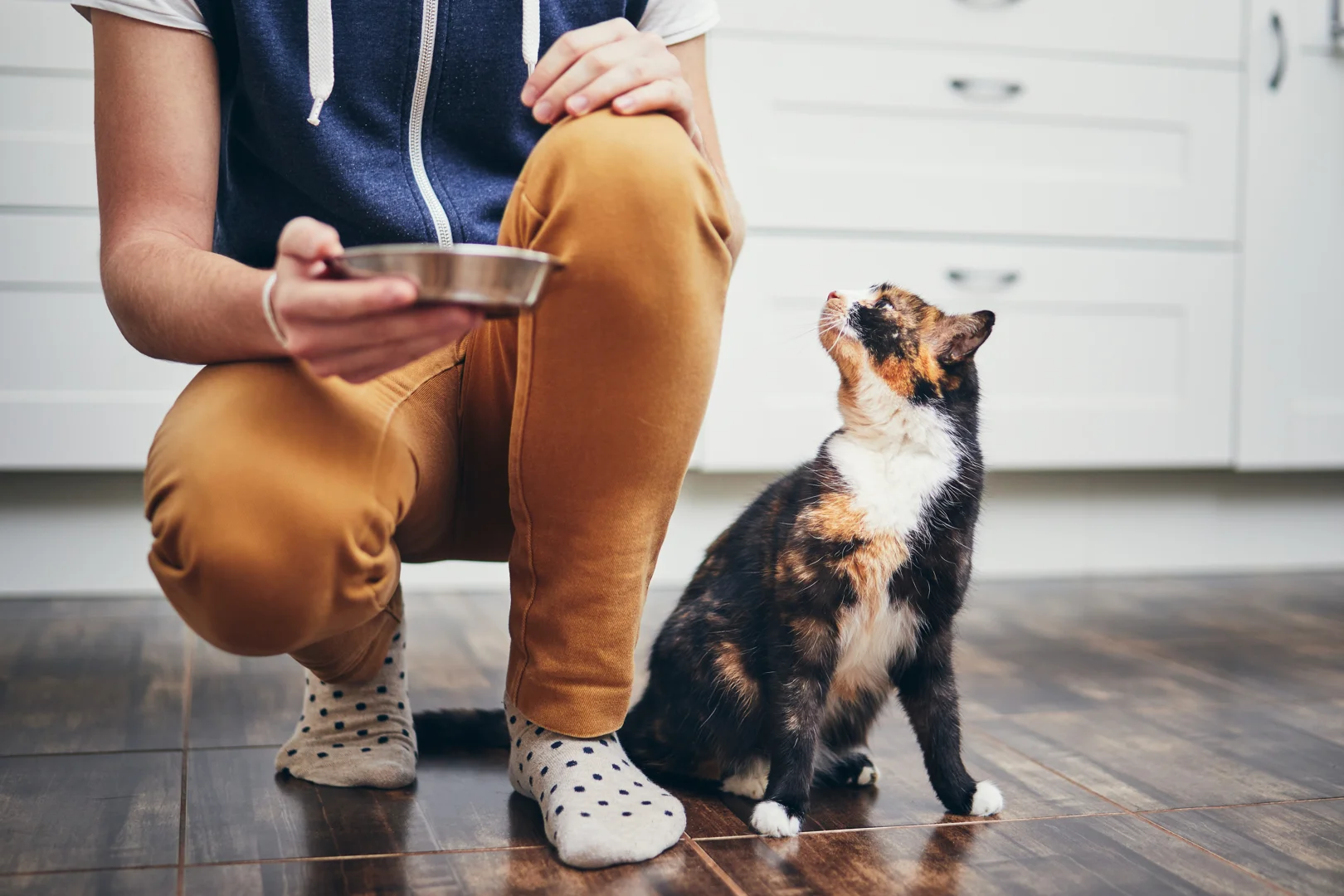
CatsOnly’s Five Pillars principle of Multiple & Separated Resources means giving Cats choice and reducing competition. For litter boxes, a common guideline is one box per Cat plus one extra, placed in separate locations. For food, water, resting spots, hiding spaces, and scratching areas, provide multiple separated options that fit your Cats and home.
Safe retreat zones are an important feline environmental need, consistent with the Five Pillars model of healthy cat environments. Hide boxes, elevated perches, and quiet resting areas give Cats options for resting, hiding, observing household activity, or creating distance, though each Cat may prefer different types of spaces. In multi-Cat homes, placing several safe spaces throughout the home can help reduce competition, especially when Cats have more than one route or option and do not need to pass another Cat to reach them.
Play and Predatory Behavior
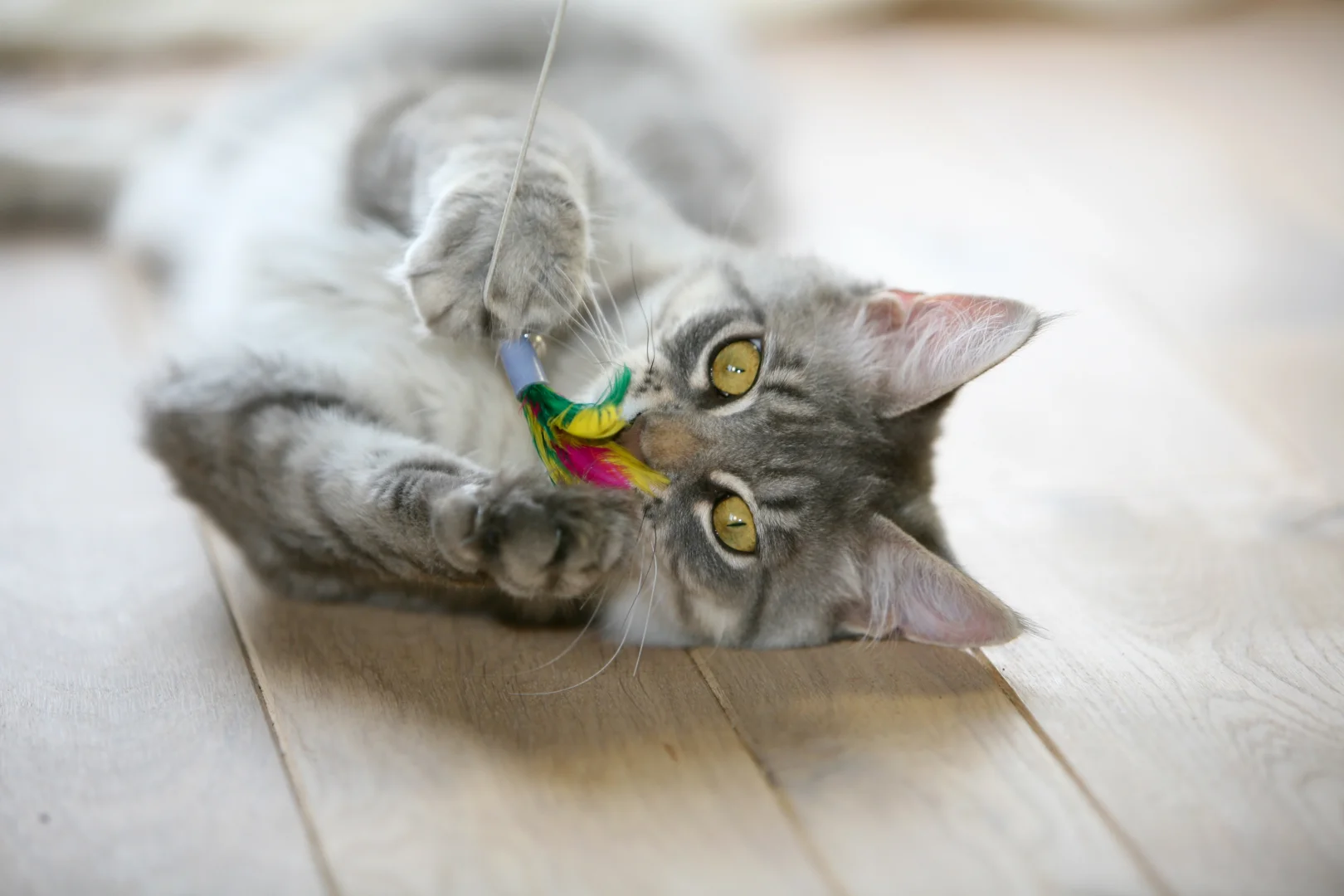
Interactive play can provide an appropriate opportunity for a Cat to express species-typical predatory behavior. Wand toys and other interactive toys can be moved in ways that encourage stalking, chasing, pouncing, and capturing, though different Cats may prefer different toys, movements, and play styles.
Offer play in ways that match your Cat’s age, health, mobility, interest, and response, using toys and timing that fit their preferences. Play before meals can be one option, and puzzle feeders or foraging toys can add varied opportunities for predatory, foraging, and food-seeking behaviors.
Frequently Asked Questions About Cat Behavior
Why does my Cat suddenly become more active at night?
Sudden bursts of nighttime activity, often called "zoomies," can fit an individual Cat’s normal activity pattern, and many Cats are more active around dusk or dawn. If nighttime activity is new or noticeably increased, especially with changes in vocalization, sleep, appetite, interaction, or other behavior, discuss it with your veterinarian.
If it fits your Cat's interests and routine, evening interactive play can offer another opportunity for species-typical play and predatory behaviors, though preferences vary by Cat.
What’s the difference between urine marking and urinating outside the litter box?
Urine marking and urinating outside the litter box can look different, but the pattern alone cannot identify the cause. Urine marking commonly involves a Cat standing and depositing smaller amounts on vertical surfaces, sometimes with tail movement. Urinating outside the litter box more commonly involves squatting and urinating on horizontal surfaces. Any new urination change should be discussed with the Care Team, because urinary and other medical conditions cannot be ruled out by location or appearance alone.
Because urinary tract disease and other medical conditions can contribute to changes in urination or litter box use, schedule a veterinary visit before assuming the change is behavioral. While that evaluation is underway, you can still review litter box setup and clean urine-soiled areas thoroughly with enzymatic cleaners, while avoiding ammonia-based products as recommended in feline veterinary behavior guidance.
Why does my Cat bring me toys or prey?
Cats may bring toys, socks, or caught prey to their human families as part of normal object carrying, play, or predatory behavior. The action alone does not reveal a specific intention, so it is best understood in context with that individual Cat’s usual patterns.
When an indoor Cat carries or relocates a toy or object, the meaning can vary. It may happen around play, foraging, or predatory-style activity, but context matters. Watch what your Cat does before and after. Puzzle feeders and hunting-style toys can provide healthy opportunities for species-typical play, foraging, and predatory behavior indoors.
When to Talk With Your Veterinarian About Behavior Changes
Meaningful or persistent behavior changes deserve a thoughtful clinical evaluation to understand what may be contributing and what your Cat needs. At CatsOnly, medical causes are considered and ruled out first when possible, while history, examination, indicated testing, and environmental and behavioral modification guide care before or alongside medication when clinically appropriate.
CatsOnly Stanley Marketplace in Aurora, Colorado provides feline-only veterinary care designed through the Cat’s lens, supported by the Feline BioBehavioral Care Standards™ and the PEACE Method™ as CatsOnly’s broader care framework. For practical preparation before your visit, start with selecting an appropriate carrier and CatsOnly’s guidance for reducing pre-appointment stress. If behavior changes are part of the concern, bring notes about what changed, when it started, and any safe home videos that may help the Care Team understand the pattern.
If you've noticed a change in your Cat's behavior or have questions about what you're seeing, book a visit with the CatsOnly Care Team.
References
- Turner, D. C. (2021). Unanswered questions and hypotheses about domestic cat behavior, ecology, and the cat-human relationship. Animals , 11(10), 2823. PMCID PMC8532687.
- Overall, K. L. (2020). Behavior Problems of Cats. MSD Veterinary Manual. https://www.msdvetmanual.com/behavior/behavior-of-cats/behavior-problems-of-cats
- Crowell-Davis, S. L. (2021). Social Behavior of Cats. Merck Veterinary Manual. https://www.merckvetmanual.com/behavior/behavior-of-cats/social-behavior-of-cats
- American Association of Feline Practitioners. (2024). 2024 AAFP Intercat Tension Guidelines: Recognition, Prevention, and Management.
- Ramos, D. (2019). Common feline problem behaviors: Aggression in multi-cat households. Journal of Feline Medicine and Surgery , 21(3), 221-233. DOI: 10.1177/1098612X19831204
- Ethogram of the Domestic Cat (Felis catus). (2024). Pets , 1(3), 284-314. DOI: 10.3390/pets1030021. https://www.mdpi.com/2813-9372/1/3/21
- Humphrey, T., Proops, L., Forman, J., Spooner, R., & McComb, K. (2020). The role of cat eye narrowing movements in cat-human communication. Scientific Reports , 10(1), 16503.
- Cats Protection. (2022). Understanding your cat's behaviour. https://www.cats.org.uk/media/y1wjcoq0/understanding-cat-behaviour.pdf
This article is for educational purposes and reflects general feline health information. It is not a diagnosis and does not replace an examination by a veterinarian who knows your Cat. Every Cat is an individual, and recommendations can change with age, history, and physical findings. If you notice a change from your Cat's normal baseline, or you have questions about your Cat's health, contact your veterinary Care Team. If your Cat is struggling to breathe, unable to urinate, or collapsed, seek veterinary care immediately.

Veterinary care designed entirely for Cats.
Most clinics accommodate Cats. We were built for them.
SHARE THIS ARTICLE:
Latest Articles