
How to Choose the Best Cat Carrier for Your Feline Friend
By CatsOnly Care Team • September 18, 2026
Choosing the right carrier means thinking about how you'll use it, along with your Cat's size and individual preferences. Cats can be sensitive to changes in their environment, and a carrier that feels cramped, unstable, or difficult to get in and out of can make travel more stressful before the trip even begins.
Sizing and Interior Clearance
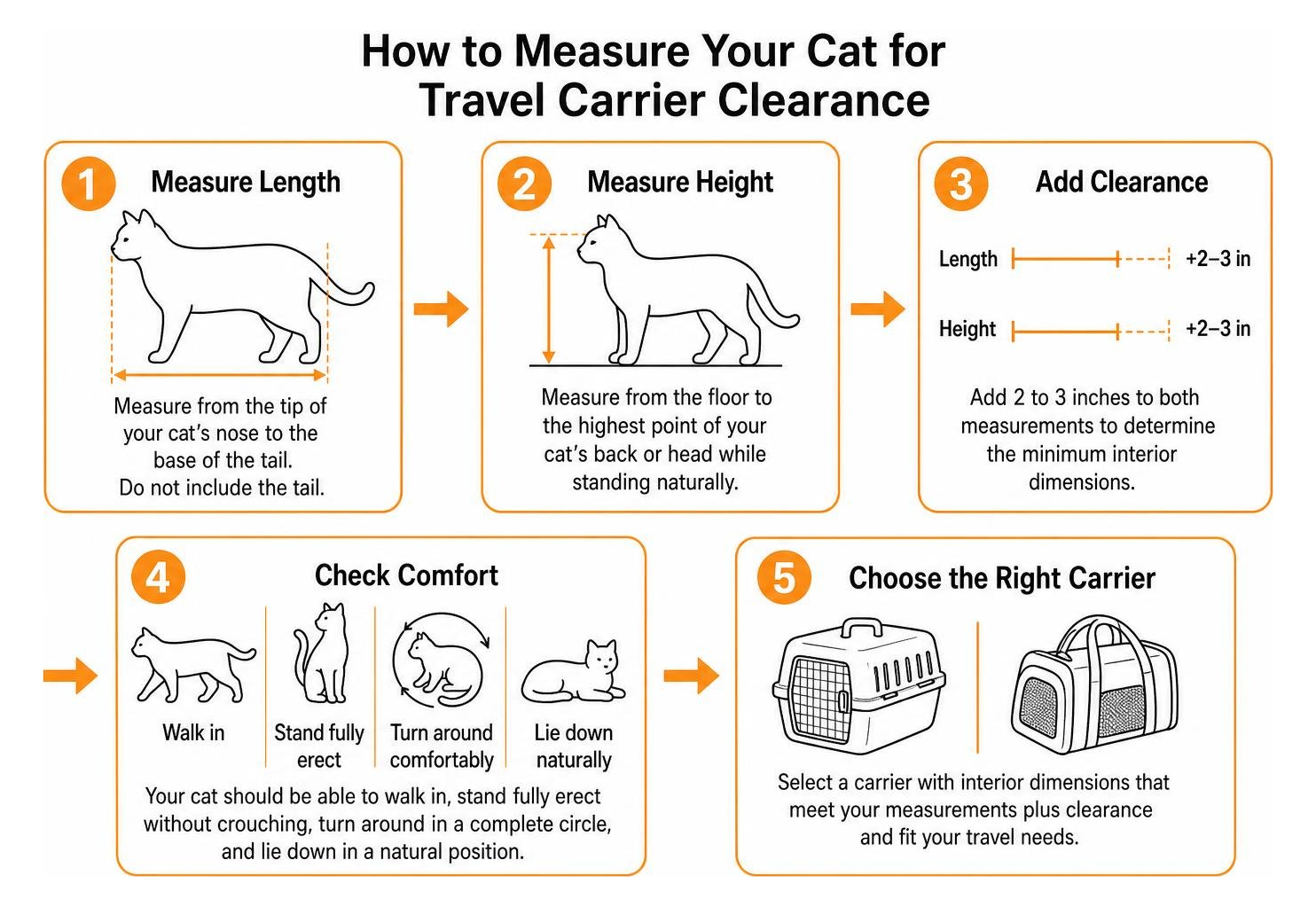
To find a carrier with enough room for your Cat to feel comfortable without being too large, start by taking a few simple measurements:
- Length: Measure from the tip of your Cat’s nose to the base of their tail. You don’t need to include the full length of the tail.
- Height: Measure from the floor to the highest point of your Cat's back or head while standing naturally.
- Add a little extra room: Add about 2 to 3 inches to both measurements to help determine the minimum interior size of the carrier.
Your Cat should have enough room to walk in, stand comfortably without crouching, turn around, and lie down in a natural position. For car travel, a little extra space can make room for comfortable bedding. For air travel, the carrier also needs to fit within your airline’s current under-seat requirements while giving your Cat enough room to be comfortable.
Comparing Carrier Styles
Different types of carriers work better for different kinds of travel.
- Hard-Sided Carriers: These sturdy carriers are durable, easy to clean, and can offer more structure and protection during travel. They can be a good choice for routine car rides and veterinary visits, especially for Cats who benefit from a carrier that feels stable and secure.
- Soft-Sided Carriers: These are lightweight, easier to carry, and can fit more easily into tighter spaces, including under some airline seats. Look for a well-structured carrier with durable material and enough support that the sides won’t sag inward on your Cat.
- Backpack Carriers: These can be convenient for walking or public transit because they keep your hands free. Look for a stable base, plenty of ventilation, and some visual privacy rather than fully clear “bubble” designs that can expose your Cat to more sights and heat during travel.
- Rolling Carriers: Wheels can make it easier to transport a Cat through airports or over longer distances without carrying their full weight. Keep in mind that rolling can create additional vibration and noise, so look for a carrier with a stable, well-padded interior that helps your Cat feel secure.
Essential Security and Access Features
A carrier must keep your Cat completely secure while allowing gentle, cooperative handling.
- Top-Loading Access: Multiple entry points are essential. A top-opening door or zipper allows you to lower your Cat into the carrier gently, rather than attempting to ease them through a narrow front doorway. It can also give the Care Team more options during a veteirnary visit.
- Claw-Resistant Ventilation Mesh: For soft-sided carriers, look for strong, durable mesh that provides plenty of airflow without snagging easily on claws or tearing if your Cat scratches at it.
- Secure Zippers and Closures: Some Cats may push their nose or paws against openings when they’re anxious or trying to get out. Look for sturdy zippers or closures that stay securely fastened, such as locking zipper pulls, clips, or built-in safety buckles.
Understanding feline behavioral considerations can help you select a carrier that respects your Cat's sensory needs and lowers emotional distress.
Safety, Crash Testing, and Travel Regulations
Whether you’re driving or flying, your Cat’s carrier plays an important role in keeping them safe and secure. For car travel, consider how the carrier is designed and secured in the vehicle. For air travel, you’ll also need to make sure it meets your airline’s current requirements.
Vehicular Safety and Crash Testing
Most traditional Cat carriers are designed to contain a Cat, not to withstand the physical forces of a vehicular collision. During a sudden stop or collision, an unrestrained or poorly secured carrier can move through the vehicle or potentially be damaged on impact.
The Center for Pet Safety (CPS) is an independent non-profit research and testing organization that evaluates Cat travel products using rigorous sled-testing protocols aligned with Federal Motor Vehicle Safety Standard (FMVSS) 213 child restraint criteria. Crash-tested or certified carriers may include stronger frames, secure closures, and designated ways to attach the carrier to a vehicle’s seatbelt system.
When securing any carrier in a car:
- Place the carrier in the rear seat or on the floorboard behind the front seats, which is often the most secure, stable location.
- Thread the vehicle's lap and shoulder belt through the manufacturer's designated seatbelt loops or latches.
- Make sure the carrier is stable and won’t easily rock or slide during the drive.
- Avoid placing your Cat's carrier in the front passenger seat where an active airbag deployment could strike it.
Airline Compliance (FAA and In-Cabin Guidelines)
Airlines require Cats traveling in the passenger cabin to remain inside an approved carrier, which must fit beneath the seat in front of you throughout taxi, takeoff, flight, and landing. Because carrier requirements can vary by airline and aircraft, always check your airline’s current rules before traveling.
- Carrier Size: While exact dimensions vary by aircraft and airline, standard under-seat dimensions generally range between 17 to 19 inches in length, 10 to 12 inches in width, and 8.5 to 10 inches in height.
- Flexible Design: Soft-sided carriers with flexible frames can make it easier to fit the carrier beneath an airline seat while still giving your Cat as much usable space as possible.
- Leak-Proof Bottom: Look for a carrier with a waterproof or leak-resistant bottom and consider adding comfortable, absorbent, washable bedding in case of an accident during travel.
Managing Sensory Overload
Travel introduces unfamiliar sights, scents, and sounds. Many Cats may feel more secure when they have some visual privacy from everything happening around them. Carriers with privacy flaps or covers can help reduce exposure to activity in busy places like airport terminals, parking areas, or veterinary hospitals.
Reviewing pre-travel calming strategies provides additional guidance on preparing your Cat for a lower-stress travel journey and veterinary visits.
Product Comparison: Cat Carrier Options
There are many Cat carriers available, and the examples below are just a few options to consider for common needs including air travel, car rides, larger Cats, and veterinary visits. The options below cover common needs including air travel, car rides, larger Cats, and veterinary visits. Product availability, dimensions, weight limits, airline acceptance, and safety claims can change, so confirm the current product information and your airline's requirements before purchasing.
| Carrier Model | Type | Weight Limit | Dimensions (L x W x H) | Notable Features | Primary Entry Points | Best Use Case |
|---|---|---|---|---|---|---|
| Sleepypod Air | Soft, compressible | Up to 18 lbs | 16–22 in x 10.5 in x 10.5 in | Flexible length; seatbelt straps | Top and ends | Flights and car travel |
| Away The Pet Carrier | Soft, structured | Up to 18 lbs | 18.7 in x 10.8 in x 10.75 in | Structured shell; privacy screen | Top and side | In-cabin flying and commuting |
| SturdiBag Pro 3.0 | Soft, flex-height | Varies by size | Varies by size | Flex-height frame; privacy flaps | Top and front | In-cabin flights and larger Cats |
| Sherpa Original Deluxe | Soft-sided | Varies by size | Varies by size | Mesh ventilation; top and side access | Top and side | Budget-conscious air travel |
| Pet Gear VIEW 360 | Soft carrier with rigid base | Check current listing | Check current listing | Push-button canopy; wide access | Dual canopy access | Larger Cats and easier access |
| Petmate Two Door Top Load | Hard-sided kennel | Varies by size | Varies by size | Top door; easy-clean plastic base | Top and front | Veterinary visits and car travel |
| Catit Voyageur Model 100 | Hard-sided kennel | Check current listing | Check current listing | Top petting door; front entry | Top and front | Routine travel and veterinary visits |
Cat Carrier Options for In-Cabin Flights and Car Travel
For Cat Parents looking for a carrier that works for both flying and driving, compare the carrier dimensions with your airline’s current under-seat requirements and review the manufacturer’s instructions for securing it in your vehicle.
1. Sleepypod Air
The Sleepypod Air has a flexible-length design intended to help it fit beneath some airline seats while preserving usable floor space for your Cat. Its multiple entry points, washable bedding, mesh ventilation, and privacy panels may also support a calmer travel setup. For car trips, follow the manufacturer's current instructions for using its seatbelt straps.
2. Away The Pet Carrier
Away The Pet Carrier combines a structured soft-sided shape with a removable bed, mesh ventilation, a privacy screen, and top and side access. The carrier also includes latches intended for vehicle seatbelt use. Confirm the current product dimensions against the airline and vehicle setup you plan to use.
Cat Carrier Options for Larger Cats and Veterinary Visits
For larger Cats and veterinary visits, prioritize a stable base, enough room for your Cat to turn and rest comfortably, secure closures, and access that gives the Care Team options for gently handling your.
1. SturdiBag Pro 3.0
The SturdiBag Pro 3.0 uses a flex-height frame that can compress for some under-seat spaces. Its top and front openings, privacy flaps, and removable pad can make loading, travel, and cleaning more manageable. Select the size based on your Cat's measurements and the current manufacturer weight guidance.
2. Pet Gear VIEW 360
The Pet Gear VIEW 360 has a rigid base and a wide, push-button canopy that provides easy access to your Cat. This may be helpful during veterinary visits by giving the Care Team more options for accessing your Cat without reaching through a narrow front opening. Because the design is more open, consider whether your individual Cat prefers more visual privacy during travel.
3. Petmate Two Door Top Load
The Petmate Two Door Top Load is a hard-sided option with both front and top doors. The top opening can make it easier to gently lower your Cat into the carrier and gives the Care Team another way to access your Cat during a veterinary visit. The plastic shell is also easy to wipe clean after travel. Choose a size that gives your Cat enough room to stand, turn, and lie down comfortably.
Frequently Asked Questions About Cat Carriers
How do I accurately measure my Cat to ensure the carrier fits properly?
To measure your Cat accurately:
- Have your Cat stand naturally on a hard, level surface.
- Use a flexible measuring tape to measure along the spine from the tip of the nose to the base of the tail (excluding the tail length).
- Measure vertically from the floor to the highest point of their back or ears.
- Add 2 to 3 inches to both the length and height measurements.
This should give your Cat enough room to enter, stand, turn around, and lie down comfortably. Also check the carrier manufacturer’s current weight and size recommendations, particularly if you have a larger Cat.
What carrier features make veterinary exams easier and less stressful?
#
Certain carrier features can give the Care Team more options for gently accessing and examining your Cat:
- Removable Top Halves: Some hard-sided carriers allow the top to be removed completely. This may allow your Cat to remain in the familiar bottom half of the carrier, on their own bedding, for part of the exam.
- Large Top-Loading Openings: A large top door allows you to lower your Cat into the carrier gently at home and gives the Care Team another way to access your Cat during a veterinary visit.
- Zipperless or Wide Canopy Access: Designs like wide-opening soft shells or dual-hinged canopies allow exams to proceed at your Cat's pace, supporting consent-based handling and minimizing physical restraint.
How can I help my Cat feel more comfortable with their carrier?
If the carrier only comes out before a car ride or veterinary visit, your Cat may learn to associate it with those experiences. Keeping it out at home can help make it a more familiar part of their environment.
- Keep the Carrier Out at Home: Place the carrier in a quiet area your Cat regularly uses, with the door open or removed when possible.
- Add Familiar Scent and Comfort: Line the carrier base with a soft towel or blanket carrying your Cat's scent or familiar household scents.
- Create Positive Reinforcement: Place favorite treats, interactive toys, or small meals inside the carrier daily, allowing your Cat to explore and rest inside voluntarily.
- Practice Gradually: Once your Cat is comfortably entering the carrier, practice closing the door for short periods, rewarding calm behavior, and gradually building up to short, relaxed car rides around the block.
For a detailed step-by-step training protocol, review our guide on feline-friendly carrier preparation, or ask your Care Team for guidance tailored to your Cat.
Conclusion
Choosing the right carrier can help support your Cat's physical safety and emotional wellbeing whenever you leave home together. Whether you select a crash-tested carrier for road trips, a flexible carrier for flights, or a top-loading hard -sided carrier for veterinary visits, focus on a secure fit, reliable closures, comfortable space, and access that works well for your individual Cat.
This article is for educational purposes and reflects general feline health information. It is not a diagnosis and does not replace an examination by a veterinarian who knows your Cat. Every Cat is an individual, and recommendations can change with age, history, and physical findings. If you notice a change from your Cat's normal baseline, or you have questions about your Cat's health, contact your veterinary Care Team. If your Cat is struggling to breathe, unable to urinate, or collapsed, seek veterinary care immediately.

Veterinary care designed entirely for Cats.
Most clinics accommodate Cats. We were built for them.
SHARE THIS ARTICLE:
Latest Articles