Cat Wellness Exams: What to Expect and What They Cost
By CatsOnly Care Team • October 1, 2026
What to Expect at Your Cat's Wellness Exam
A Cat wellness exam is a planned checkup for a Cat who appears well, while also recognizing that Cats can hide subtle illness. It includes a health history, physical examination, and individualized prevention and screening, informed by the 2021 AAHA/AAFP Feline Life Stage Guidelines, along with your Cat’s life stage, lifestyle, risks, and exam findings. It is also a good time for Cat Parents to ask what care or screening is recommended, why it matters, and how costs are explained.
Cats can show very subtle changes when they are unwell, which is why routine veterinary care creates opportunities to notice findings that may warrant closer evaluation. A wellness visit usually starts with prevention and health monitoring, but it may also uncover a concern that leads to additional diagnostics or a more focused sick visit. By tracking what is typical for your individual Cat, including weight, dental health, mobility, and relevant lab results when appropriate, your veterinary team can see changes over time and decide whether further evaluation or screening makes sense.
The final cost depends on your Cat's life stage, lifestyle and individual risk factors, vaccine history, screening recommendations, and any diagnostics the Care Team recommends for your Cat, not every Cat will need the same add-ons. For current details, review CatsOnly pricing, or see whether the CatsOnly membership fits your Cat's ongoing care needs.
The CatsOnly Care Team can help you prepare for the visit, answer questions, and explain recommendations so you can make informed decisions about your Cat’s care.
What to Expect During a Cat Wellness Exam
Your Cat's wellness visit includes a conversation about health, behavior, routines, and what you've noticed at home, from appetite, water intake, and litter box habits to activity, mobility, grooming, sleep, and social interaction. Cats often show subtle shifts that can sometimes be associated with changes in health, so your observations are clinically useful. We also discuss your Cat's environment and lifestyle to help the veterinarian consider individual needs, risk factors, and relevant preventive care options.
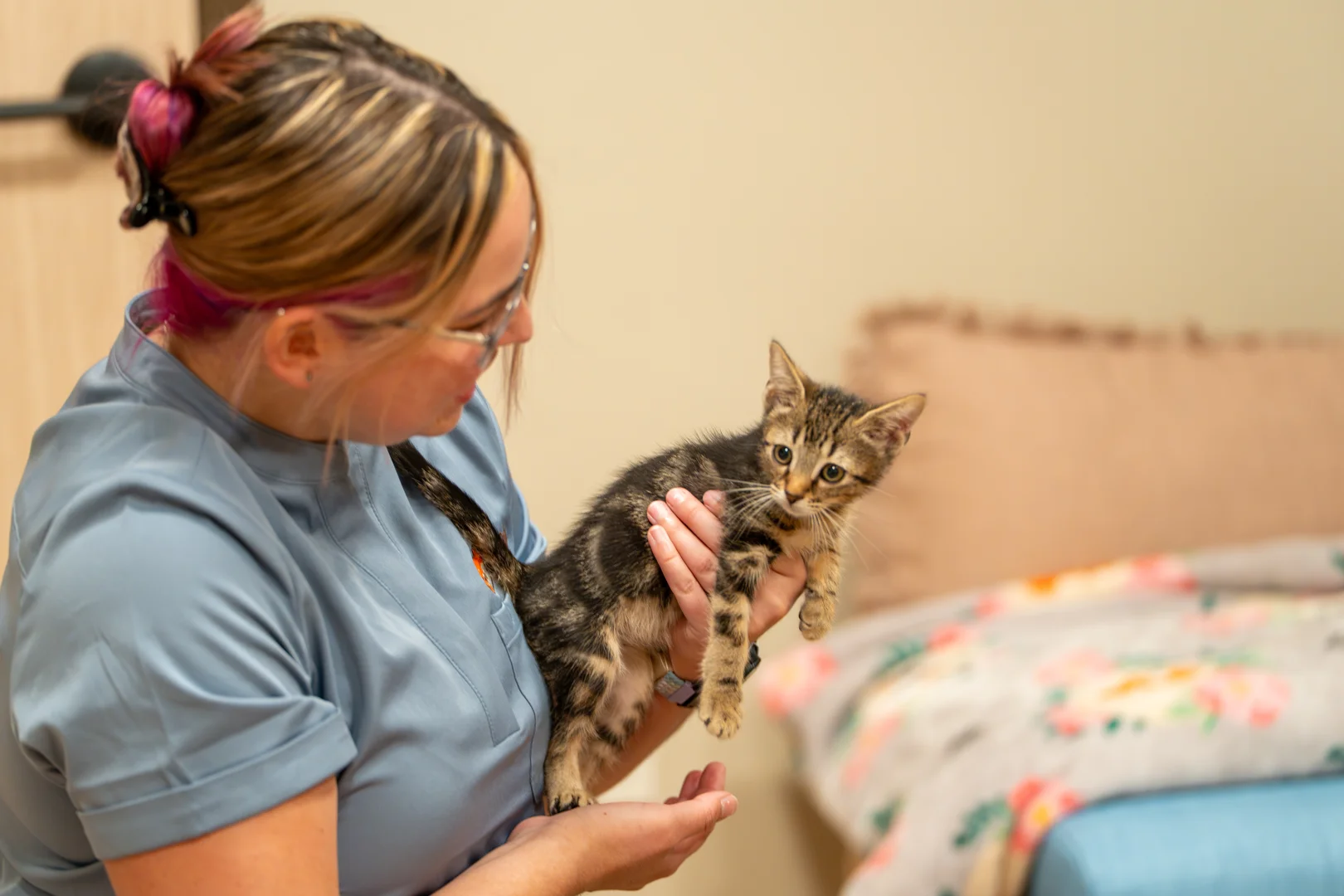
During the visit, our Care Team performs a physical examination and records findings that can be compared over time. We track weight trends, use a body condition score to assess body fat, and evaluate muscle condition separately when clinically appropriate. When the exam allows, care can take place where your Cat is most comfortable, such as in the carrier base, on a padded surface, or on the floor. This patient-paced approach means the Care Team responds to the Cat in front of them while still completing the necessary medical assessment.
What Your Veterinarian Evaluates During a Wellness Exam
During the physical exam, your veterinarian evaluates multiple aspects of your Cat’s health and looks for findings that may need closer evaluation:
- Eyes, Ears, and Face: We look for cloudiness, discharge, redness, inflammation, odor, irritation, or asymmetry in the eyes, ears, and facial features.
- Oral Health Assessment: We evaluate the teeth, gums, and oral tissues for signs of tartar, inflammation, injury, or discomfort. This awake check is helpful, but it is not the same as a complete dental evaluation under anesthesia.
- Heart and Lungs: We listen to the heart and lungs for murmurs, rhythm changes, or abnormal breathing sounds that may warrant further evaluation.
- Abdominal Palpation: We gently feel the abdomen to assess abdominal organs and tissues for changes in size, shape, position, or comfort.
- Skin, Coat, and Body Condition: We look for parasites, dander, skin irritation, lumps, or wounds, then assess body condition score and muscle condition score as separate measures.
- Musculoskeletal and Mobility Check: We observe movement and may assess joints, muscles, limbs, and the spine as appropriate for your Cat, noting stiffness, pain, or reduced mobility.
- Lymph Nodes and Thyroid Region: We may palpate lymph nodes and the neck region when clinically appropriate, checking for enlargement or changes, especially in older Cats.
Preventive Screening and Laboratory Testing
When recommended for an individual Cat, preventive screening, such as bloodwork, urinalysis, or other laboratory testing, can provide information a physical exam alone cannot. Choices depend on life stage, history, risk factors, prior results, and clinical findings. Results may establish a baseline or, over time, reveal changes and findings that warrant further investigation:
- Complete Blood Count (CBC): Evaluates red blood cells, white blood cells, and platelets, and may identify changes that warrant further evaluation.
- Biochemistry Profile: Reviews values such as kidney-related markers, liver enzymes, blood glucose, proteins, and electrolytes for broader health screening.
- Urinalysis: Measures urine concentration and checks for substances such as protein, blood, glucose, or crystals, which can inform kidney and urinary health.
- Fecal Parasite Screening: Uses appropriate fecal testing methods to screen for intestinal parasites when recommended based on risk, history, or life stage.
- Blood Pressure Measurement: Provides a blood-pressure reading and can help identify hypertension or hypotension, especially when age or health conditions increase risk.
Following established AAHA feline life stage recommendations, screening tests are individualized based on your Cat's life stage, health history, lifestyle, risk factors, health status, and physical exam findings.
How Often Should Your Cat Have a Wellness Exam?
How often your Cat should have a wellness exam can change throughout their life. Life-stage guidelines provide a starting point, but your veterinarian may recommend a different schedule based on your Cat’s health, medical history, and individual needs:
- Kittens (0 to 1 year): Kittens commonly have wellness visits every 3 to 4 weeks until about 16 to 20 weeks of age, so the Care Team can build health baselines and individualize vaccines, parasite care, nutrition, and behavior guidance. CatsOnly also recommends sterilization by 5 months as a clinical standard. Start with preparing for kitten appointments.
- Adult Cats (1 to 6 years): Healthy adult Cats should have a wellness evaluation at least once per year. Separately, CatsOnly recommends an annual Comprehensive Oral Health Assessment and Treatment (COHAT) beginning at age 2. A COHAT is dental care, not just a routine wellness check.
- Mature Cats (7 to 10 years): Current feline life-stage guidance supports regular preventive evaluations, often at least annually, with frequency individualized to the Cat. CatsOnly also begins routine hypertrophic cardiomyopathy (HCM) screening at age 7 as part of its clinical approach.
- Senior and Geriatric Cats (10+ years): Some guidelines group Cats over 10 as senior, while other frameworks separate geriatric Cats at 15+. These Cats often benefit from more frequent monitoring, commonly every six months, with blood pressure checks, lab work, and other screening chosen based on health status rather than done automatically at every visit.
- Cats with chronic conditions or geriatric needs: Some Cats need more than the standard life-stage schedule, regardless of age. Depending on the condition, stability, treatment plan, and veterinarian’s judgment, visits may be recommended every 3 to 4 months, or about 3 to 4 times per year.
Preparing Your Cat for a Wellness Visit
Preparing ahead of time can make the carrier experience more familiar and predictable for your Cat. Leaving the carrier open at home with familiar bedding can help it become a more familiar part of the Cat’s environment, rather than something that appears only before a trip. Treats or preferred toys may be offered inside to invite voluntary interaction, while letting your Cat choose whether and how to explore it.
A synthetic feline pheromone spray on carrier bedding may help some Cats during travel. For Cats who have difficulty with travel or veterinary visits, our Care Team can discuss individualized pre-visit support, which may include medication when appropriate. You can review more wellness appointment preparation steps to help prepare your Cat and yourself for the visit.
What Does a Cat Wellness Exam Cost?
A cat wellness visit can include more than the exam itself, so the exam fee and total visit cost are not always the same. Any additional screening, vaccines, treatments, or medications should be based on your Cat's life stage, history, lifestyle, and what we discuss with you. At our Stanley Marketplace hospital in Aurora, our published office visit exam fee is $85 , and a new Cat's first exam is $42.50 . Our CatsOnly Membership includes unlimited office visits, but that does not mean all testing, treatments, medications, or other services are included. See our current pricing, since prices are subject to change.
At CatsOnly, the wellness exam fee covers the physical exam and Care Team assessment. Vaccines, laboratory screening, parasite testing, and other services are separate line items when we recommend them for your individual Cat. Because fees can change, we keep the most accurate cost information on our current pricing page. Some Membership plans may include different pricing for recommended screening panels.
When additional care is recommended, our Care Team will review the recommendations and associated costs with you. This helps you understand what is being considered for your Cat, what relates to today's visit, and how we can make informed decisions together.
Estimated Cat Wellness Exam Cost Breakdown
Our current Stanley Marketplace pricing can help you understand and plan for the cost of your Cat's care. These are individual service fees, not a bundled total for every Cat or every visit, and you can review our current pricing at any time.
| Service Category | Our Current Price | Cost Context |
|---|---|---|
| New Cat's first exam | $42.50 | Listed price for a Cat's first exam |
| Office visit exam | $85 | Common starting point for a routine wellness visit |
| Juvenile Wellness Panel | $117 | May be recommended based on age, history, and exam findings |
| Adult Comprehensive Panel | $148 | May be recommended for adult baseline or monitoring needs |
| Senior Comprehensive Panel | $214 | May be recommended for older Cats or more detailed monitoring |
| Vaccines | $41 to $108 | Price varies by vaccine type and formulation |
These are individual service prices, not a bundled wellness-visit total. Your Cat's recommendations and total cost will vary based on their age, health history, lifestyle, and exam findings. Current pricing is available on our pricing page.
Frequently Asked Questions About Cat Wellness Exams
How often should an indoor Cat have a routine checkup?
Indoor Cats should receive regular wellness checkups based on their life stage and individual needs, not a separate schedule just because they live indoors. Most healthy adult Cats benefit from at least one visit each year, while kittens, senior or geriatric Cats, and Cats with chronic conditions may need more frequent care. Indoor Cats can still develop dental disease, weight changes, kidney disease, thyroid disease, and other health concerns. During the visit, the veterinarian evaluates the whole Cat and may recommend screening based on age, history, and exam findings. It is also a good time to discuss behavior, litter box habits, activity, play, and the home environment, since these details can reveal useful information about your Cat's behavioral and environmental needs.
What is the difference between a wellness visit and a sick visit?
A wellness visit is a routine, planned evaluation for a Cat who appears healthy. It looks broadly at current health, reviews changes over time, and helps us discuss individualized preventive care or screening. A sick visit starts with a specific concern, such as vomiting, weight loss, or changes in urination, and focuses on deciding whether testing, treatment, or monitoring is appropriate. Our veterinary medical services page can help Cat Parents see how we approach different appointment needs.
Why are additional lab tests recommended for senior Cats?
As Cats get older, the chance of certain health conditions increases, including chronic kidney disease, diabetes mellitus, and hyperthyroidism. Screening tests such as blood chemistry panels, complete blood counts, urinalysis, and thyroid hormone testing help identify findings that warrant closer monitoring, even when your Cat appears well or changes at home are subtle. If results raise questions, your Care Team may recommend repeat testing, additional diagnostics, or care changes based on the full exam. Cat Parents who want feeding guidance across life stages can also review information on senior nutritional needs.
Conclusion
Wellness exams help Cat Parents and veterinarians understand what has changed, evaluate current health, review previous findings, and decide which preventive care makes sense for each Cat. If your Cat is due for a wellness exam, book a visit with our Care Team.
This article is for educational purposes and reflects general feline health information. It is not a diagnosis and does not replace an examination by a veterinarian who knows your Cat. Every Cat is an individual, and recommendations can change with age, history, and physical findings. If you notice a change from your Cat's normal baseline, or you have questions about your Cat's health, contact your veterinary Care Team. If your Cat is struggling to breathe, unable to urinate, or collapsed, seek veterinary care immediately.
Veterinary care designed entirely for Cats.
Most clinics accommodate Cats. We were built for them.
SHARE THIS ARTICLE:
Latest Articles