
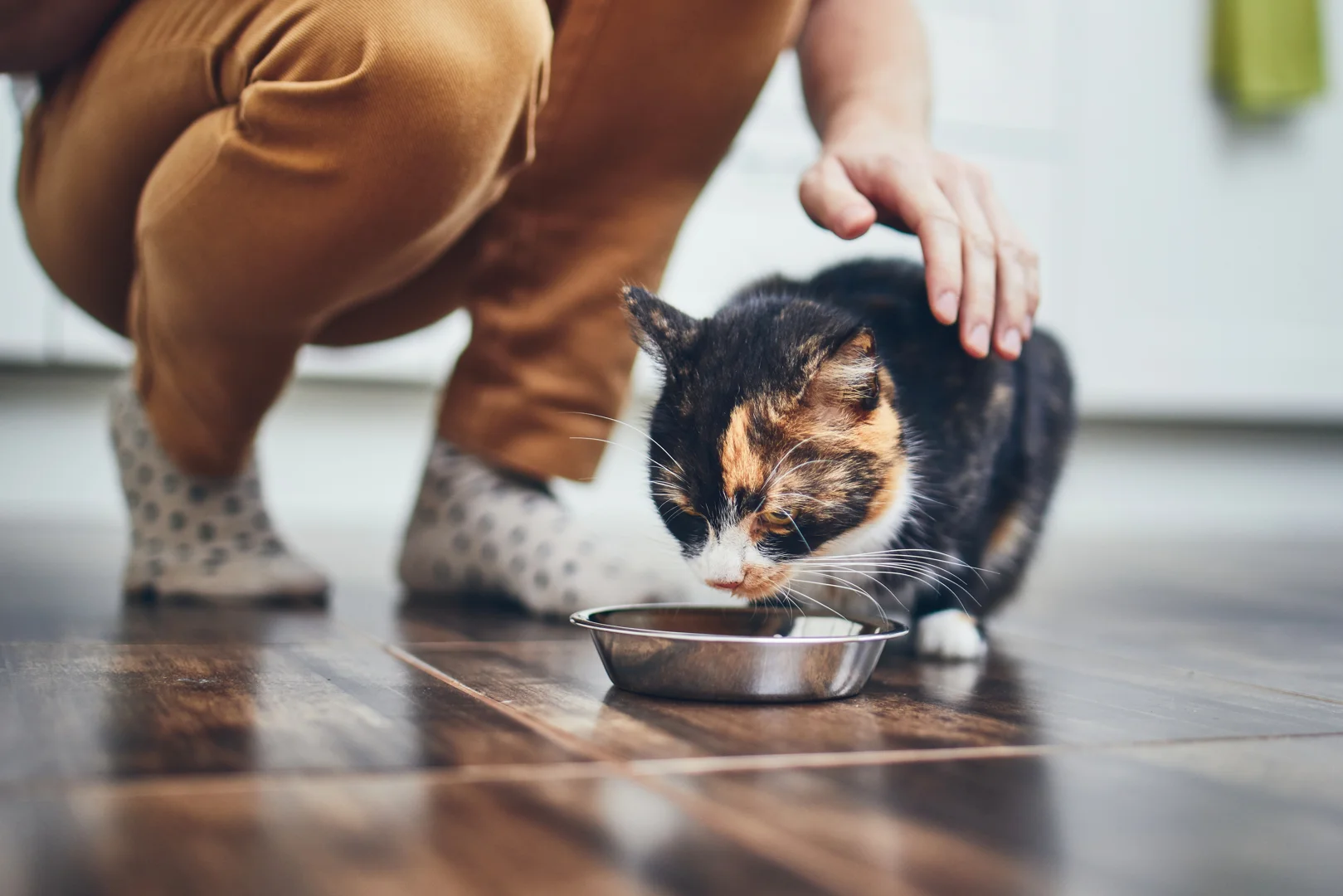
How to Transition Cat Food for Cats with Sensitive Stomachs
By CatsOnly Care Team • September 23, 2026
For a Cat with a sensitive stomach, a gradual food transition may be helpful, but there is no single schedule that fits every Cat. The right pace depends on the Cat’s current diet, the new diet, health history, appetite, and the reason for the change. Because sudden food changes can cause vomiting, gas, or loose stool in some Cats, Cat Parents should move slowly and ask a veterinarian for guidance if digestive signs continue or a medical condition is involved.
Understanding feline digestion helps explain why an abrupt diet change can trigger gastrointestinal signs in some Cats, not all. Cats are obligate carnivores, which shapes their overall nutritional needs, but transition tolerance varies by Cat, diet, and health status. Veterinary guidance favors gradual transitions because some Cats are less likely to develop vomiting, diarrhea, or appetite changes when foods are introduced step by step.
When a new diet is introduced abruptly, some Cats develop gastrointestinal signs such as decreased appetite, vomiting, flatulence, softer stool, or diarrhea. The exact reason can vary by Cat, diet type, health status, and how different the new food is from the previous one, so it is best not to assume a single mechanism. A gradual transition gives the digestive system time to adjust, helps Cat Parents spot early intolerance, and reduces the risk that a sensitive Cat will reject the new food entirely.
A critical concern during any food transition is whether your Cat is eating enough. If a new food causes nausea, stomach upset, or simple refusal, intake can drop quickly. Prolonged or significant food reduction can be medically important in Cats because it may increase the risk of hepatic lipidosis, also called fatty liver disease, a serious liver condition that can develop when a Cat does not take in enough calories. During a transition, Cat Parents should track how much food is actually eaten, not just how much is offered. If your Cat stops eating, eats much less than usual, or shows vomiting, diarrhea, lethargy, or other concerning signs, contact your veterinarian promptly. Integrating structured feline nutrition planning into your Cat's routine can also make diet changes more thoughtful and easier to monitor.
Common Reasons Your Cat's Food May Need to Change
There are many reasons a Cat's food may need to change throughout their life:
- Life-Stage Transitions: Moving from a growth diet to adult maintenance food, or adjusting food later in life when an individual Cat’s health, body condition, or veterinary plan calls for it.
- Therapeutic Management: Switching to a veterinary therapeutic diet when recommended by the veterinarian for that Cat’s specific diagnosis, tolerance, and nutritional needs.
- Format and Moisture Changes: Shifting from dry kibble to wet or canned food when a Cat Parent and veterinarian want to increase dietary moisture or match a Cat’s texture preferences.
- Supply Disruptions or Reformulations: Responding to manufacturer ingredient updates, product discontinuations, or individual taste preferences.
How Quickly Should You Transition Your Cat to a New Food?
Dietary transitions need deliberate pacing based on the individual Cat, the foods involved, the reason for the change, and any veterinary guidance. Some Cats tolerate small diet changes quickly, while others need a slower, more cautious approach. Do not fast a Cat before or during a food transition unless your veterinarian specifically directs it, and monitor daily intake closely.
During a transition, foods can vary in calories per serving, so follow the new food’s feeding guide and your veterinarian’s portion recommendations. A kitchen scale can help measure accurately.
This is a general example, not a universal protocol. Purina recommends a gradual 7-10 day transition when changing cat food.
| Transition Phase | Purina 7-10 Day General Transition Example |
|---|---|
| Stage 1 | Days 1-2: 75% old food / 25% new food |
| Stage 2 | Days 3-4: 50% old food / 50% new food |
| Stage 3 | Days 5-7: 25% old food / 75% new food |
| Stage 4 | Days 8-10: 100% new food |
| Flexibility | This is a general example, not a universal protocol. Cats with sensitive stomachs may need a longer transition. |
Some Cats need more time, especially if they develop digestive upset or are slow to accept the new food. Cats with diagnosed gastrointestinal disease, including IBD or chronic GI conditions, should follow a transition plan created by their veterinarian.
The Standard 7-Day Schedule for Healthy Adults
For many adult Cats, a gradual transition over about 7-10 days can be a useful starting point when introducing a new food, while some Cats may need a slower pace:
As a general example, the cited veterinary guidance uses this 7-day pattern for many Cats. It is not a one-size-fits-all protocol, and some Cats need a slower transition.
- Days 1-2: 75% old diet mixed with 25% new diet.
- Days 3-4: 50% old diet mixed with 50% new diet.
- Days 5-6: 25% old diet mixed with 75% new diet.
- Day 7 and beyond: 100% new diet.
A gradual transition gives your Cat time to adjust to the new food and may help reduce digestive upset linked to an abrupt change.
When Your Cat May Need a Slower Food Transition
Age alone should not set the pace: some Cats with digestive sensitivity may need a slower transition, while diagnosed gastrointestinal disease requires veterinary nutrition guidance.
- Go at your Cat's pace: Some Cats need longer than the general transition example, especially if appetite, stool quality, or comfort changes.
- Consider the reason for the change: A routine life-stage diet change may move faster than a switch for suspected food intolerance or digestive disease.
- Factor in health history: Cats with prior vomiting, diarrhea, IBD, pancreatitis, kidney disease, or other medical concerns may need veterinary guidance before progressing.
- Watch daily tolerance: If your Cat develops vomiting, diarrhea, or reduced appetite, pause the transition and contact your veterinarian.
- Avoid fixed slow schedules: There is no one-size-fits-all extended timetable. Your veterinarian can help set the safest pace for your Cat.
When a Cat has diagnosed gastrointestinal disease, repeated vomiting or diarrhea during transitions, or a history of poor tolerance, pause the standard plan and ask a veterinarian for individualized guidance. A structured workup for evaluating gastrointestinal sensitivities can help identify concerns that make routine transitions harder.
Managing Food Transitions in Selective Eaters and Multi-Cat Households
How you prepare the meal can affect whether your Cat accepts the new diet. Many veterinary transition plans recommend blending the old and new foods thoroughly, rather than serving them as separate portions. Watch your Cat’s response at each meal, then adjust texture, temperature, or pace if acceptance drops.
For some Cats, thoroughly mixing the foods may help with acceptance. With wet or canned foods, you can gently mash the measured old and new portions together with a fork or spatula. With dry kibble, combine the measured portions in the bowl before serving. The goal is a manageable transition while confirming your Cat continues to willingly eat an adequate amount each day.
Slightly warming wet food may make it more appealing to some Cats, but it should feel only mildly warm, never hot. If your Cat enjoys a predictable routine, a short, calm play session before meals can be included, but it is optional. Treats do not need to disappear during a transition. Keep them limited, avoid introducing several new treats or toppers at once, and focus on helping your Cat keep eating while gradually accepting the new food.
Multi-Cat Household Management Strategies
Managing a food change in a home with multiple Cats may require a little more structure to make sure each Cat eats the food intended for them:
- Separate Feeding Stations: Feed Cats in separate rooms with closed doors, or use microchip-activated feeders, so each Cat has access only to their own measured dish.
- Monitored Meals: Separate, supervised meals can make it easier to confirm who ate the new food, who avoided it, and how much each Cat consumed.
- Individual Transition Pacing: If multiple Cats are changing foods, expect different tolerance levels. One Cat may move forward smoothly, while another may need smaller increases or longer plateaus.
- Stool and GI Tracking: Monitor stool quality, vomiting, gas, appetite, and behavior, but shared litter boxes can make it hard to know which Cat produced which change.
What Warning Signs Should You Watch for During a Food Transition?
Monitoring your Cat during a diet change means watching more than stool consistency. Some Cats may have mild digestive changes during a transition, but also track appetite, vomiting, gas, eating habits, and daily behavior. The next section explains what Cat Parents may observe and when veterinary guidance is appropriate.
Digestive changes to watch for include:
- Persistent loose or watery stool.
- New or noticeably increased gas.
- Regurgitation, where food or fluid comes back up with little effort.
- Vomiting, especially if repeated or forceful.
- Possible nausea-related behaviors, such as lip licking or increased drooling.
- Reduced appetite or refusal to eat, particularly for more than 24 hours.
Behavior changes can also accompany physical discomfort or illness during a food transition. Watch for changes from your Cat’s normal routine, such as reduced grooming, unusual lethargy, a hunched posture after eating, appetite changes, or hiding. Litter-box changes, including hesitation, vocalization, altered posture, diarrhea, or rapidly leaving the box, are also worth noting and discussing with your veterinarian, since they can have many medical or behavioral causes. For more details on looking at the whole Cat, explore feline behavioral considerations.
What Should You Do if Digestive Signs Develop During a Food Transition?
If your Cat develops vomiting, watery diarrhea, significant lethargy, or other concerning signs during a food transition, contact your veterinarian for guidance rather than assuming the food change is the cause.
If your Cat develops vomiting, diarrhea, lethargy, appetite changes, litter box changes, or other concerning signs during a food transition, do not assume the new food is the cause or that the transition was simply too fast. Several medical issues can appear at the same time as a diet change.
Cat Parents should:
- Notice and write down the signs, including when they started and how often they occur.
- Monitor whether the Cat is eating and drinking normally.
- Watch for changes in energy, comfort, grooming, and litter box habits.
- Contact the veterinarian if signs are significant, persistent, recurrent, or paired with reduced intake or a change in overall condition.
Your veterinarian can advise whether to pause the transition, return to the previous food, adjust the plan, investigate another cause, or choose a different approach for your individual Cat.
When Should You Contact Your Veterinarian During a Food Transition?
Some digestive changes may be mild, but certain signs during a food transition warrant prompt veterinary guidance:
- Complete loss of appetite or a substantial drop in normal food intake.
- Repeated or persistent vomiting, especially if your Cat cannot keep food or water down.
- Bright red blood or dark, tarry material in the stool.
- Reduced drinking along with illness, weakness, or other worsening signs.
- Marked lethargy, hiding, or significant changes from your Cat's normal behavior.
- Signs of discomfort, such as hunching, restlessness, or litter box hesitation.
Veterinary management may involve more than slowing the transition schedule. Based on the Cat’s diagnosis and exam findings, a veterinarian may consider targeted nutrition strategies, such as therapeutic novel-protein or hydrolyzed protein diets for suspected adverse food reactions or relevant GI disease, as outlined in the feline gastrointestinal nutritional guidelines from the Feline Veterinary Medical Association. In selected cases, probiotic or prebiotic support may also be considered, but these are not routine add-ons for every food transition and should not be started without veterinary guidance.
Frequently Asked Questions About Feline Food Transitions
How long should a Cat food transition take for a Cat with a sensitive stomach?
A food transition for a Cat with a sensitive stomach should be paced to that individual Cat. A general 7- to 10-day transition can be a starting point, while some Cats need a slower pace. For Cats with diagnosed gastrointestinal disease or a history of significant digestive problems, the schedule should be individualized with their veterinarian.
What should I do if my Cat refuses to eat the new food during the transition?
If your Cat refuses the new mixture, avoid withholding food. Adequate intake matters more than finishing the transition on a set timeline, because Cats who do not eat enough can be at risk for hepatic lipidosis. You may pause the transition and offer the previously accepted food while you ask for guidance. Slightly warming wet food can be tried as a palatability strategy, but it will not work for every Cat. If your Cat stops eating, eats substantially less than usual, or continues refusing the new food, contact your veterinarian for next steps.
Can I transition between wet and dry food using the same schedule?
Use the same general principle of gradual introduction when moving between dry and wet food, but adjust the pace and portions for your individual Cat. Wet and dry foods differ a lot in moisture and calorie density, so equal scoops are not nutritionally equivalent. Follow the feeding guidance for the new food, and work with your veterinarian when calorie needs matter. Texture is another change, so you may mix wet food into dry food for acceptance. If moistening kibble, discard leftovers promptly and wash the bowl.
What Are the Key Takeaways for Transitioning Your Cat's Food?
Successfully changing your Cat's diet comes down to three main practices:
- Pace the Process: Use an extended 14- to 21-day timeline for sensitive stomachs, advancing in small ratios to allow intestinal enzymes and gut bacteria to adjust.
- Blend Thoroughly: Create a uniform mixture of old and new food to prevent selective eating, warm wet food to body temperature, and pause treats during the transition.
- Monitor and Adapt: Watch stool consistency and daily behavior. If digestive upset occurs, step back to the previous tolerated ratio and stabilize for 72 hours before proceeding.
If your Cat experiences persistent vomiting, diarrhea, or appetite loss during a food switch, check in with our Clinical Care Team. You can review our membership options for feline-focused care access or book an appointment at CatsOnly so we can evaluate what your Cat is experiencing and determine appropriate next steps, including individualized nutrition guidance when appropriate.
This article is for educational purposes and reflects general feline health information. It is not a diagnosis and does not replace an examination by a veterinarian who knows your Cat. Every Cat is an individual, and recommendations can change with age, history, and physical findings. If you notice a change from your Cat's normal baseline, or you have questions about your Cat's health, contact your veterinary Care Team. If your Cat is struggling to breathe, unable to urinate, or collapsed, seek veterinary care immediately.

Veterinary care designed entirely for Cats.
Most clinics accommodate Cats. We were built for them.
SHARE THIS ARTICLE:
Latest Articles